Romania in World War I
Romanian oil fields and refineries were desirable to the European armies. In the early years of the war, Romania stayed
neutral. In August 1916 Romania signed a treaty with France,
England, and Russia and declared war on the Austro-Hungarian Empire ten days later (Stoenescu 2018). To prevent the
use of oil by the invading German army, in November 1916
the Romania government consented to the destruction of the
Romanian petroleum refineries, production facilities, and oil
wells in the Prahova Valley. The following month, British engineers under the command of Colonel Jack Norton-Griffiths,
and with the help of Romanian soldiers and oil company employees, destroyed several refineries and over 800,000 tons (6
million barrels) of oil in just a few days. More than 1600 oil
wells were taken out of production; at least a quarter of those
were destroyed. “For probably the first time in the history of
the oil industry an effort was made to wipe out completely
the producing, transporting, refining, and storage facilities of
a large and progressive oil country, so that the enemy could
not profit by acquiring it” (Petroleum 1919, p. 184). The German army arrived just days later. By early 1917 the German
army controlled much of the Romanian oil industry and had
repaired much of the damage, but for the entire 1917-year,
oil production was substantially less than the oil destroyed in
those few days in December 1916.
Romanian Oil Production in the Interwar Years
During the interwar years (1919-1939), Romania was an
important exporter of grains, oil, and timber. It took several
years for Romanian oil production to reach pre-war production
levels. Oil production levels in the early 1920s were flat, with
a steady rise beginning in 1925 through the mid-1930s. Prewar oil production rates were again reached in 1927 (Stoenescu 2018). Unfortunately, during the years of 1923-1926 when
international oil prices were high, Romanian oil production
was relatively low. By the time that Romanian oil production
had fully recovered and significantly increased (1931-1936),
international oil prices were low (Stoenescu 2018, p. 90).
INTERWAR OIL FIELD PHOTOGRAPHERS
Swiss Geologists – Heim and Wehrli
Two well-known Swiss geologists visited Romania during the interwar years and returned to Switzerland with many
photographs of the Romanian oil fields. Arnold Heim (1882-
1965), son of the prominent Swiss geologist Albert Heim
(1849-1937), visited Romania in the summer of 1926. Along
with F. Escher, the two photographed several Romanian oilfields, near Tintea, Moreni, Bustenari, Ochiuri, and Campina.
Many of their photographs are archived at the ETH Library,
Zurich, Switzerland (http://library.ethz.ch/en/).
Leo Wehrli (1870-1954) was a Swiss geologist, teacher,
and explorer. He was a student of, and later an assistant to,
Albert Heim. He authored Albert’s biography in 1938. Leo
visited Romania in the summers of 1935 and 1936 and photographed in the oilfields near Baicoi, Moreni, Ploiesti, and
Campina. Many of his photographs and photographic glasslides are also archived at the ETH Library, Zurich, Switzerland (http://library.ethz.ch/en/).
American Journalist and Photographer –
Frank G. Carpenter
Noted American journalist, photographer, world traveler,
and author Frank G. Carpenter (1855-1924) visited Romania
in 1923. During his travels Carpenter also photographed in the
Romanian oil fields. Many of his photographs are available
online from the United States Library of Congress under the
Carpenter Collection (https://www.loc.gov/pictures/collection/ffcarp/). In the May 27, 1924 edition of the Toledo Blade
(p. 4), in an article headlined “Oil fields of Rumania. Queer
Features of Oil Production,” Carpenter recounted his travels
through the oil fields of Romania.
Other Interwar Oil Field Photographers
Little is known of photographer Rudolf Grunblatt of Moreni. Many different oil field postcards bear “Foto Rudolf” or
“Foto Rudolf Moreni” on the photograph side. There are several known Rudolf RPPCs of the infamous “Torch of Moreni” oil well fire (Spencer and Furcuta 2018; https://furcuta.
blogspot.com/search/label/rudolf). His RPPCs appear to be
limited to the Moreni area from approximately 1929-1935. H.
Lehmann produced a night view RPPC of the “Torch of Moreni” that is dated “24. VII.1929” (July 24, 1929) (https://furcuta.blogspot.com/2015/10/160-ra-photographers.html?m=0).
STEFAN OLTEANU (1882-1954)
Stefan Olteanu (1882-1954) opened his first photographic
studio at No. 87 Carol 1 Street in the city of Campina in 1907.
That year a Campina newspaper carried an advertisement
for the “Modern photo studio Foto Olteanu” with its “new
workshop” and “photographs of all kinds and sizes, industrial
works, oil and pastel paintings, photographs on porcelain”
(https://oglindadeazi.ro/stiri/campina-o-istorie-in-date-3/). A
1913 advertisement (Vitorul, p. 3) read, “Photo Ideal St. Olteanu. Modern photography studio BP Hajdeu Street, No. 17
Field. Artistically executes portraits, groups, views, reproductions, etc. Splendid postcards are made for three lei a dozen”
(https://oglindadeazi.ro/stiri/campina-o-istorie-in-date-3/).
As with many photographic studios, Olteanu’s business
relied heavily on wedding and portrait photography. Several
examples of these are found online. During 1916-1918, the
occupying Germans required Romanians to obtain a photo
identification card. Olteanu obtained a “monopoly” on this
lucrative photographic work for the residents of the Prahova
Valley. Some gossip suggested that this was due to a local
German commander being enamored by Olteanu’s beautiful
wife (https://oglindadeazi.ro/stiri/file-de-cronica-nostalgiile-unui-vechi_23/).
In 1923, Olteanu had a large house built at No. 79 Carol
1 Boulevard with a photographic studio on the first floor and
living accommodations on the upper floors (https://campinatv.
ro/News/Article/aa8fcce5-47cb-484d-a5fa-4d9e70851d2c_
campina-romania-100-foto-olteanu-din-perioada-interbelica-un-atelier-de-tapiterie-din-anii-70-santierul-de-la-soldat-de-azi; https://furcuta.blogspot.com/search/label/olteanu). In the
late 1930s, Stefan’s son, Gogu (?-2001), came into the business and operated the studio into the 1940s. Unfortunately,
much of the Olteanu archival photographs were destroyed.
Gogu stated in an interview, “Mr. Iosifescu, the Securitate
took my entire archive, sir. I do not know where it is! They
took it, threw it in a well, set it on fire” (http://revistanoua.3x.
ro/revista_noua/puterea/Cuartetul-din-Campina.htm). The
Securitate was the Communist secret police.
One of Olteanu’s oil field photographs was published in
the German industry trade magazine, Petroleum Zeitschrift
(1925). The photograph of a burning well near Moreni is the
Pleasa Hill fire of the No. 1 RA (Romano-Americana) Moreni
Nord well, accidentally ignited while drilling on July 25, 1925
(https://furcuta.blogspot.com/2021/03/well-1-ra-pleasa-onfire.html). At the time, this was the deepest well at Moreni
(1146 meters [3760 feet]). Romano-Americana SA (Romanian-American Company), formed in 1904, was a subsidiary
of the Standard Oil Company of New Jersey. Several attempts
were made to extinguish this fire; success occurring on September 13 with the completion of a 70-meter-long (230 feet)
tunnel to the casing which was then perforated to divert the
oil flow.
The following year, another Olteanu burning well photograph was published in the French illustrated weekly newspaper, L’Illustration (July 3, 1926). This photograph is similar to
Olteanu postcards (Fig. 3) of the Schela Mare Concordia well
No. 305, CC SII Gura Ocnitei fire. Around midnight, June 15,
1926, while testing from a depth of 989 meters (3245 feet),
the well was ignited by a lightning strike. Several unsuccessful attempts were made to extinguish the well fire. One attempt involved digging a 60-meter (197 feet) tunnel to reach
the casing at a depth of 30 meters (98 feet). During a week of
digging, the flames reached heights of 30-40 meters (98-131
feet). The flames also set off a fire in a nearby open pit, burning approximately 1000 tons (7200 barrels) of oil. The fire
also destroyed the nearby No. 308 well. On the morning of
June 22, the oil flow and the fire suddenly stopped. When the
oil flow resumed, the oil was gathered and pumped to a nearby
oil tank farm (https://furcuta.blogspot.com/search/label/concordia). Swiss geologist Albert Heim also photographed the
No. 305 well fire.
OLTEANU REAL PHOTO POSTCARDS (RPPCS)
Real photo postcards (RPPCs) were very popular in the
early twentieth century, and many Olteanu photographs
were used to produce these postcards. Olteanu postcards of
Campina buildings, bridges, and scenic views are known,
but the vast majority of Olteanu RPPCs are of the surrounding oil fields. Over sixty different petroleum-related Olteanu
postcards are known of by the authors; 27 of them are in
co-author Spencer’s collection. Early Olteanu RPPCs (circa
1921-1923) have “Foto Ideal” with “St.” and either “IT”
or possibly “LT” (difficult to read). “Olteanu Campina” is
sometimes printed on the reverse. Later in 1923, the studio’s
name was changed to “Foto-Olteanu,” and this is printed on
the front lower right or left of the RPPCs until circa 1926.
Occasionally, the “Foto-Olteanu” is printed on the reverse.
Later in 1926 this is replaced by “St. Olteanu Campina”
on the photograph side. Olteanu oil field postcards reached
many countries. Within the Spencer collection are Olteanu
postcards that were sent throughout Europe (Holland, Austria, Romania, England, France, Germany, and Italy), as well
as to the United States.
A notable exception appears to be two Olteanu RPPCs of
the August 1908 No. 13 SR (Steaua Romana) Campina Draganeasa oil well fire. Both postcards have the “Foto Olteanu
Campina” on the lower right of the photograph side (https://
furcuta.blogspot.com/2024/06/the-fire-of-oil-well-no-13-sr-campina.html). If these are indeed scenes from 1908, they
would be the earliest Olteanu oil field views, and a significant gap exists in known Olteanu oil field views between
1908 and 1923.
1923 Olteanu Oil Field RPPCs
Most postcards do not provide the dates that the photographs were taken, but postmarks, when present, place a
“no later than” date to the images. One of the earliest Olteanu oil field postcards in Spencer’s collection, taken from
near the city center of Moreni, is a view of oil tanks and
workshops of the Regatul Roman Oil Company (Fig. 4).
Anglo-Dutch Shell established Astra in 1908 and acquired
Regatul Roman, and in 1909/1910 created Astra Romana
SA (Stanciu 2000, p. 32). An earlier Astra Romana was a
small oil refinery in Ploiesti established in 1880 and through
acquisitions, had become part of Astra. From 1911-1947
the refinery was within the Royal Dutch Shell Trust. The
oil tanks in the photograph were scrapped in the 1930s, and
living quarters were built in their place in the 1960s. The
long building in the center of the photograph is still there
as well as some of the smaller workshops. On the reverse
is stamped, “Foto Ideal” and either an “IT” or a “LT” (difficult read) “Olteanu.” The photograph is not dated, but it is
postmarked January 31, 1923, and was mailed to Oakland,
California, United States. There are several Olteanu RPPCs
of the Astra Romana operations near Moreni that include the
company’s headquarters, workshops, and worker housing.
A cardboard matted 1928 Olteanu photograph (26 x 22 cm
[10 x 8.5 inches]) of a group of employees of Astra Romana
was advertised for sale on the Romanian Okazii site (https://
www.okazii.ro/fotografie-veche-pe-carton-astra-romana-atelier-foto-olteanu-campina-1928-a201662118).
Another Olteanu RPPC from 1923 shows the Draganeasa
oil well fire across the Prahova River from Campina (Fig. 5).
The Forajul No. 1 Sospiro Campina Draganeasa well was
drilled within the large Campina-Draganeasa Oil Field which
has produced oil since 1896. During production testing, a
spark ignited the well on February 19, 1923. Two drillers were
killed in the fire, and several other workers were burned. This was the first major Romanian oil field disaster in the interwar
years (https://furcuta.blogspot.com/search/label/draganeasa).
The postcard was postmarked on August 18, 1923, in Campina and mailed to France.


1928 Olteanu Oil Field RPPCs
Two notable oil field fires were captured in Olteanu RPPCs. The Pascov Valley fire broke out on the morning of May
12, 1928, while the No. 298 AR (Astra Romana) Moreni Sud
well was drilling at a depth of 1445 meters (4741 feet). One
man was killed in the fire and two others injured. Eighteen
oil wells and the No. 5 Creditul oil pumping station were destroyed in the fire. The fire was extinguished over a month
later on June 26, 1928 (https://furcuta.blogspot.com/search/
label/pascov and https://furcuta.blogspot.com/2021/04/au-chat-noir-tunnel.html). Figure 6 is one of several Olteanu RPPCs of the fire. On the reverse is a handwritten note dated May
24, 1928, and postmarked the following day.
Torch of Moreni” (1929-1931) –
No. 160 Romano-Americana
The Focul Dela Moreni (“Fire from Moreni”), also known
as the “Torch of Moreni,” was the No. 160 Romano-Americana (RA) oil well fire (Fig. 7). On May 28, 1929, after drilling to a depth of 1453 meter (4767 feet), the No. 160 blew
out and caught fire. The derrick was destroyed, and the 100
meter-high (328 feet) flames could be seen from the city of
Ploiesti over 50 kilometers (32 miles) away. Several attempts
to extinguish the well were unsuccessful, and the well burned
for over two years. More than 100 workers were injured and
14 died in the process of trying to extinguish the fire. By the
spring of 1931, the “Torch of Moreni” had created a crater
76 meters (249 feet) wide and 20 meters (66 feet) deep. This,
together with erosion by rains and snow, created a deep hollow in the ground. Some gas was diverted through the soft
ground and escaped along the walls of the crater. Ignited by
the main fire, numerous ground fires were formed. The No.
160 RA well fire was photographed by Olteanu, Rudolf Grunblatt, H. Lehmann, and Leo Wehrli (https://furcuta.blogspot.com/search/label/wehrli%20leo). The extensive operations to
extinguish the well fire are documented in Spencer and Furcuta 2018.
The Runcu-Bustenari area is one of the earliest areas of oil
extraction in Romania. The first modern well was spud in the
area in 1890, and before that, oil was extracted from hand-dug
wells. Cumulative oil production from approximately 1909 to
present is 23.3 million tons (170 million barrels). Figure 8 is
one of a few Olteanu RPPCs of this oil field. This postcard is
postmarked December 12, 1928. It is one of the known Olteanu RPPCs that was later printed and sold as colorized “linen”
postcards. Beginning in the 1930s, a process of printing paper
color postcards with a high rag content gave the postcards a
look of having been printed on linen.
Steaua Romana Oil Refinery
Steaua Romana (“The Romanian Star”), founded in 1895,
quickly became a dominant company in the Romanian petroleum industry. The company was established with Romanian
and Austrian funding. In 1897 the company built an oil refinery near Campina, Romania, which at the time was the largest and most modern refinery in Europe (Figure 9). In
1903, the German Deutsche Bank acquired the Austro-Hungarian interests. By 1915, Steaua Romana was the
second largest producer of oil in Romania. The Germans
confiscated the refinery in 1916 and reopened it in 1917.
After WWI, the company became majority-owned by
Romanians with minor French and English interests.
Additional Olteanu RPPCs include views of oil
wells along the Prahova River, the Bucea Oil Field near
Campina, the Campina electrical power plant, and several views of the Moreni oil fields in the Pascov Valley
and on the Tuicani Plateau.

The visual documentation of the early 1900s petroleum history throughout the world has benefited from
local and visiting photographers. During the interwar
years in Romania, these photographers included Swiss
geologists Arnold Heim and Leo Wehrli, and American
journalist and photographer Frank G. Carpenter. Romanian photographers, such as Rudolf Grunblatt and Stefan Olteanu, recognized the growing popularity of real
photo postcards (RPPCs) and produced views of the petroleum industry.
Stefan Olteanu of Campina, Romania was arguably the foremost photographer of the early oil fields
of south-central Romania. Olteanu’s RPPCs captured
scenes of early wooden oil derricks, infamous oil field
fires, and oil company facilities and refineries. Many
Olteanu postcards were mailed to family and friends
around the world, sharing the images of Romania’s early
petroleum industry.
ACKNOWLEDGEMENTS
Much of this material was presented on May 21st at
the 2024 Oil History Symposium in Calgary, Alberta,
Canada. The petroleum history of Romania is vast and
fascinating. Much of it, especially the visual aspects of
this industry, are documented in co-author Furcuta’s
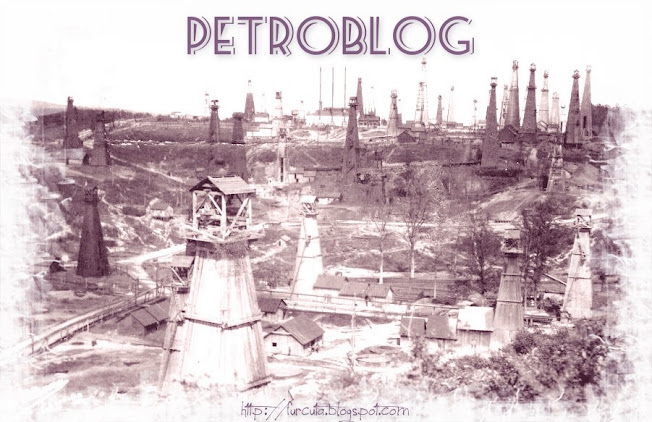
blog, Petroblog (https://furcuta.blogspot.com/). Thanks
to James McDonald, Matthew Silverman, and Mary
Barrett for reviewing this paper.
REFERENCES
GUIDE DU CONGRES ET DES EXCURSIONS, 1925:
1st Congres International de Forages, Bucharest, September, 61 pp
L’ILLUSTRATION, 1926: July 3, p. 24.
PETROLEUM, 1919: v. 7, p. 184-185.
PETROLEUM ZEITSCHRIFT, 1925: September 20, v. 21, no.
27, p. 1720.
SPENCER, Jeff and FURCUTA, Marius, 2018, Myron Kinley
and the “Torch of Moreni,” in: CRAIG, J., GERALI,
F., MacAULAY, F., and SORKHABI, R., eds., History of the European Oil and Gas Industry: London,
The Geological Society, Special Publications 465, p.
375-80.
STANCIU, Laura, 2000, Free-standing companies in the oil
sector in Romania and Poland before 1948: typologies and competencies: Business History, v. 42, no.
4, p. 27-66.
STOENESCU, Camil-George, 2018, Romania during the
Interwar Period: an economic approach: The Romanian Economic Journal, Special 20th Anniversary Issue, Year XXI, no. 70, p. 80-93.
TOLEDO (Ohio) BLADE, 1924: May 27, p. 4.
VITORUL, 1913: no. 5, p. 3.
Websites & Blogs
https://campinatv.ro/News/Article/aa8fcce5-47cb-484d-a5fa-4d9e70851d2c_campina-romania-100-foto-olteanu-din- perioada-interbelica-un-atelier-de-tapiterie-din-anii-70-santierul-de-la-soldat-de-azi/, accessed June
13, 2024
https://furcuta.blogspot.com/2015/10/160-ra-photographers.
html?m=0
https://furcuta.blogspot.com/2021/03/well-1-ra-pleasa-on-fire.html
https://furcuta.blogspot.com/2021/04/au-chat-noir-tunnel.
html
https://furcuta.blogspot.com/2024/06/the-fire-of-oil-well-no-13-sr-campina.html
https://furcuta.blogspot.com/search/label/concordia
https://furcuta.blogspot.com/search/label/draganeasa
https://furcuta.blogspot.com/search/label/pascov
https://furcuta.blogspot.com/search/label/rudolf
https://furcuta.blogspot.com/search/label/wehrli%20leo
http://library.ethz.ch/en/
https://oglindadeazi.ro/stiri/campina-o-istorie-in-date-3/, accessed June 13, 2024
https://oglindadeazi.ro/stiri/file-de-cronica-nostalgiile-unui-vechi_23/, accessed June 13, 2024
http://revistanoua.3x.ro/revista_noua/puterea/Cuartetul-din-Campina.htm (November 30, 2002, interview),
accessed June 13, 2024
https://www.loc.gov/pictures/collection/ffcarp/
https://www.okazii.ro/fotografie-veche-pe-carton-astra-romana-atelier-foto-olteanu-campina-1928-a201662118,
accessed June 13, 2024
Jeff Spencer is a charter member, past president, and current
vice-president of the Petroleum History Institute (PHI). Jeff is a geoscientist and principal with Sentinel Energy, LLC, Houston, Texas. He received
a BS in Geology from the University
of Cincinnati and a MS in Earth Sciences from the University of New Orleans. He was previously employed as Chief Geologic Advisor with Amromco Energy, working Romania (2013-2017).
He has authored or co-authored more than 50 oil field history
papers. Jeff co-authored Ohio Oil and Gas (2008) and authored Texas Oil and Gas (2013) and Illinois Oil and Gas
(2023). He collects postcards, philatelic material, and other
ephemera with oilfield themes.


.JPG)


+Oil+Company+-+1925.JPG)
+Oil+Co.,+Ltd.+Cert.+of+25+shares+of+%C3%82%C2%A31+ea.+-+London+1926.JPG)


.jpg)


+-+1895.JPG)


.JPG)


