Showing posts with label refinery. Show all posts

The first oil refinery in Campina - Steaua Romana

Vue générale de la batterie white spirit
Moteurs diesel de la station de pompage d'eau
Le laboratoire central
La batterie avec 10 chaudieres
View of the Petrobrazi refinery a few months after the fall of the communist regime

Ploiesti, Romania in 1990
View of the Petrobrazi refinery a few months after the fall of the communist regime

Petrobrazi refinery in 1980

Ploiesti, Socialist Republic of Romania-approx 1980
Workers in the control room at the Petrobrazi refinery

Romanian oil fields during WW II

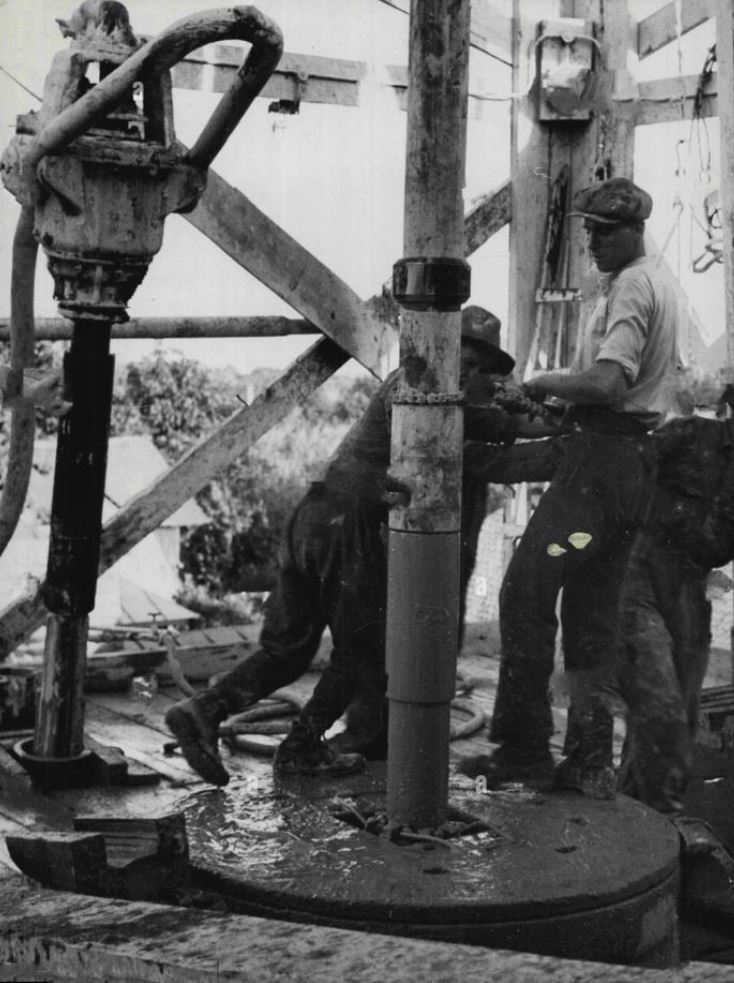
Screwing on new lengths of oil pipe at a new well. 
The huge swivel which holds the drill pipe when in operation is seen on the left.
June, 18, 1940
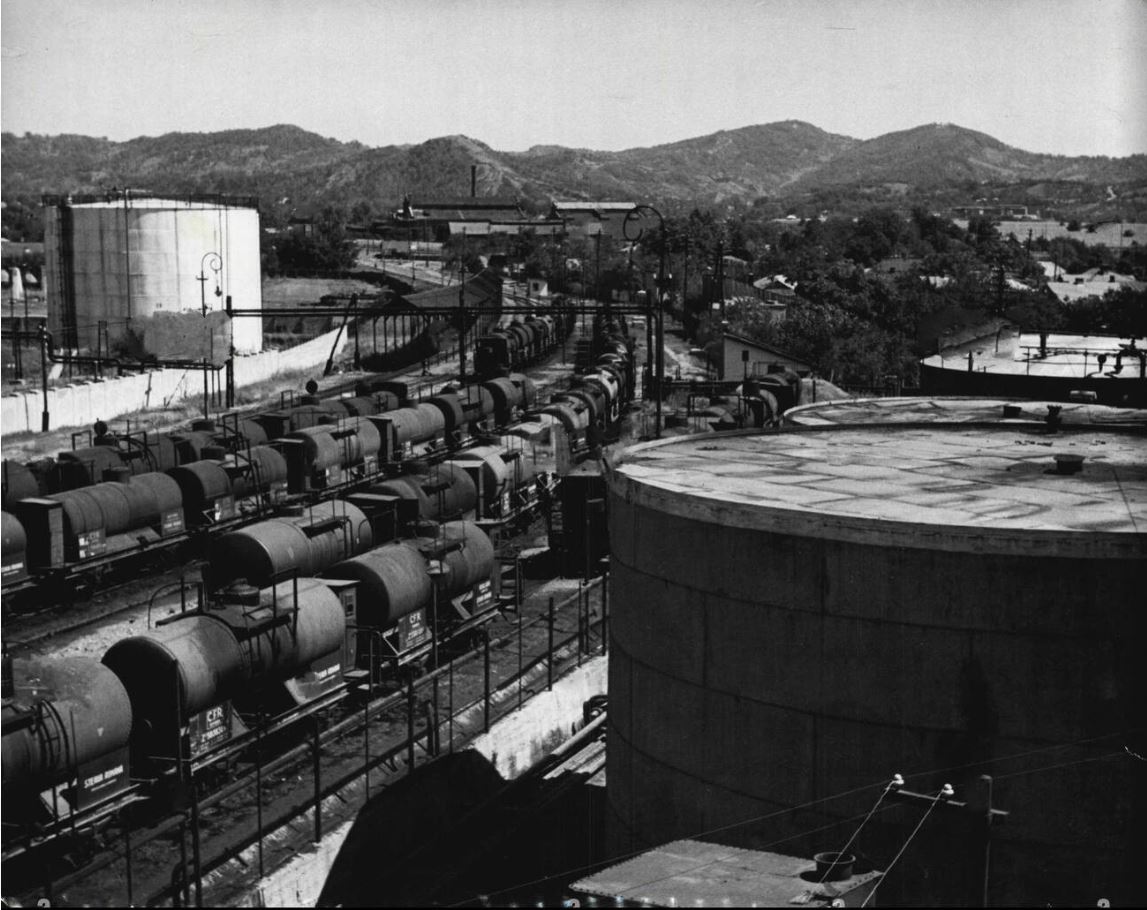
A railway yard beside one of the many oil refineries in Romania. The oil is piped down to the large tanks from the wells in the hills in the background, refined and then pumped into tankcars.
Romanian oil fields. A modern oil refinery at Campina
June, 18, 1940
Cracking plant Astra Romania
August, 16, 1943
General view of Astra Romania - the biggest oil refinery in Europe
August, 16, 1943
Refining plant at Brazi in the Prahova oil field north of Bucharest
January, 23, 1940

STEFAN OLTEANU (1882-1954) ROMANIAN PHOTOGRAPHER OF INTERWAR OIL FIELD SCENES

Jeff Spencer 

675 Piney Creek Road 

Bellville, TX 77418 

spencerj320@gmail.com 


Marius Furcuta 

Moreni, Romania 

furcuta@hotmail.com 

ABSTRACT: Often referred to as the Golden Age of Romania’s oil industry, the interwar years (1919-1939) were a time of both rapidly increasing oil production and of international investment in the country’s petroleum industry. During these years, many photographers produced real photo postcards of scenes from Romanian oil fields, especially those near the towns of Moreni, Bustenari, and Campina in south-central Romania. Several of these photographers included their name on the postcards. Researching these visual documenters of an important period of Romania’s petroleum history is challenging. The noted Swiss geologist Arnold Heim (1882-1965) is included in a group of lesser-known photographers with names, such as Rudolf, Lehmann, Wehrli, and Carpenter. One of the more prolific oil field photographers was Stefan Olteanu. 

Stefan Olteanu (1882-1954) lived in Campina, Romania where he, and later his son, operated a photographic studio, circa 1907 into the 1940s. Early Olteanu real photo postcards are identified by “Foto Ideal” printed on the reverse. Later Olteanu postcards include on the picture side the words “Foto-Olteanu Campina” and later “St. Olteanu Campina.” Olteanu photographed the nearby oil fields and refineries and produced high-quality real photo postcards. Scenes included several oil field fires, including the No. 1 Sospiro Campina Draganeasa well (1923), the first major Romanian oil field disaster in the interwar years. Other Olteanu oil field fire views are the No. 305 Gura-Ocnitei (1926), No. 298 AR Moreni Pascov (1928), and the infamous “Torch of Moreni,” Romano-Americana Company’s No. 160 well (1929-1931). Many Olteanu postcards depict general panoramic views of oil fields, such as those along the Prahova River Valley near Campina, the Pascov Valley and Tuicani Plateau near Moreni, and the Runcu-Buștenari Oil Field

INTRODUCTION 

  The southern foothills of the Carpathian Mountains in south-central Romania are the historic center of the country’s petroleum industry (Fig. 1). The Prahova River flows between the Bucegi and the Baiului Mountains, within the Carpathian Mountains. Figure 2 is a portion of a 1925 oil field map (Guide du Congres et des Excursions 1925, map 5) of this area. In the southeast corner of the map is the city of Ploiesti, the county seat of Prahova County, located approximately 60 km (37 miles) northwest of the capital city of Bucharest. The Ploiesti area became one of the world’s leading centers for oil refining in the mid-19th century and the gateway to the prolific oil fields northwest in the Prahova River Valley. Key Prahova County towns and cities on the map, and approximate distances from Ploiesti, are Baicoi (20 km [12 miles] northwest), Tintea (20 km [12 miles] northwest), Campina (37 km [23 miles] northwest), and Bustenari (37 km [23 miles] northnorthwest). Moreni (35 km [22 miles] west) is in Dambovita County along the Cricov River. 

  Many early photographers, both residents and visitors to south-central Romania, helped to document the petroleum industry of the country. Some of these local professional photographers produced real photo postcards (RPPCs) of oil field scenes, oil industry housing, oil company facilities, and oil refineries. RPPCs of oil field fires were exceptionally popular, including several well fires in the Prahova Valley and the Tuicani Plateau. 


Romania in World War I 

  Romanian oil fields and refineries were desirable to the European armies. In the early years of the war, Romania stayed neutral. In August 1916 Romania signed a treaty with France, England, and Russia and declared war on the Austro-Hungarian Empire ten days later (Stoenescu 2018). To prevent the use of oil by the invading German army, in November 1916 the Romania government consented to the destruction of the Romanian petroleum refineries, production facilities, and oil wells in the Prahova Valley. The following month, British engineers under the command of Colonel Jack Norton-Griffiths, and with the help of Romanian soldiers and oil company employees, destroyed several refineries and over 800,000 tons (6 million barrels) of oil in just a few days. More than 1600 oil wells were taken out of production; at least a quarter of those were destroyed. “For probably the first time in the history of the oil industry an effort was made to wipe out completely the producing, transporting, refining, and storage facilities of a large and progressive oil country, so that the enemy could not profit by acquiring it” (Petroleum 1919, p. 184). The German army arrived just days later. By early 1917 the German army controlled much of the Romanian oil industry and had repaired much of the damage, but for the entire 1917-year, oil production was substantially less than the oil destroyed in those few days in December 1916. 

Romanian Oil Production in the Interwar Years 

  During the interwar years (1919-1939), Romania was an important exporter of grains, oil, and timber. It took several years for Romanian oil production to reach pre-war production levels. Oil production levels in the early 1920s were flat, with a steady rise beginning in 1925 through the mid-1930s. Prewar oil production rates were again reached in 1927 (Stoenescu 2018). Unfortunately, during the years of 1923-1926 when international oil prices were high, Romanian oil production was relatively low. By the time that Romanian oil production had fully recovered and significantly increased (1931-1936), international oil prices were low (Stoenescu 2018, p. 90). 

INTERWAR OIL FIELD PHOTOGRAPHERS 

Swiss Geologists – Heim and Wehrli 

  Two well-known Swiss geologists visited Romania during the interwar years and returned to Switzerland with many photographs of the Romanian oil fields. Arnold Heim (1882- 1965), son of the prominent Swiss geologist Albert Heim (1849-1937), visited Romania in the summer of 1926. Along with F. Escher, the two photographed several Romanian oilfields, near Tintea, Moreni, Bustenari, Ochiuri, and Campina. Many of their photographs are archived at the ETH Library, Zurich, Switzerland (http://library.ethz.ch/en/). 

  Leo Wehrli (1870-1954) was a Swiss geologist, teacher, and explorer. He was a student of, and later an assistant to, Albert Heim. He authored Albert’s biography in 1938. Leo visited Romania in the summers of 1935 and 1936 and photographed in the oilfields near Baicoi, Moreni, Ploiesti, and Campina. Many of his photographs and photographic glasslides are also archived at the ETH Library, Zurich, Switzerland (http://library.ethz.ch/en/). 

American Journalist and Photographer – Frank G. Carpenter 

  Noted American journalist, photographer, world traveler, and author Frank G. Carpenter (1855-1924) visited Romania in 1923. During his travels Carpenter also photographed in the Romanian oil fields. Many of his photographs are available online from the United States Library of Congress under the Carpenter Collection (https://www.loc.gov/pictures/collection/ffcarp/). In the May 27, 1924 edition of the Toledo Blade (p. 4), in an article headlined “Oil fields of Rumania. Queer Features of Oil Production,” Carpenter recounted his travels through the oil fields of Romania. 

Other Interwar Oil Field Photographers 

  Little is known of photographer Rudolf Grunblatt of Moreni. Many different oil field postcards bear “Foto Rudolf” or “Foto Rudolf Moreni” on the photograph side. There are several known Rudolf RPPCs of the infamous “Torch of Moreni” oil well fire (Spencer and Furcuta 2018; https://furcuta. blogspot.com/search/label/rudolf). His RPPCs appear to be limited to the Moreni area from approximately 1929-1935. H. Lehmann produced a night view RPPC of the “Torch of Moreni” that is dated “24. VII.1929” (July 24, 1929) (https://furcuta.blogspot.com/2015/10/160-ra-photographers.html?m=0). 

STEFAN OLTEANU (1882-1954) 

  Stefan Olteanu (1882-1954) opened his first photographic studio at No. 87 Carol 1 Street in the city of Campina in 1907. That year a Campina newspaper carried an advertisement for the “Modern photo studio Foto Olteanu” with its “new workshop” and “photographs of all kinds and sizes, industrial works, oil and pastel paintings, photographs on porcelain” (https://oglindadeazi.ro/stiri/campina-o-istorie-in-date-3/). A 1913 advertisement (Vitorul, p. 3) read, “Photo Ideal St. Olteanu. Modern photography studio BP Hajdeu Street, No. 17 Field. Artistically executes portraits, groups, views, reproductions, etc. Splendid postcards are made for three lei a dozen” (https://oglindadeazi.ro/stiri/campina-o-istorie-in-date-3/). 

  As with many photographic studios, Olteanu’s business relied heavily on wedding and portrait photography. Several examples of these are found online. During 1916-1918, the occupying Germans required Romanians to obtain a photo identification card. Olteanu obtained a “monopoly” on this lucrative photographic work for the residents of the Prahova Valley. Some gossip suggested that this was due to a local German commander being enamored by Olteanu’s beautiful wife (https://oglindadeazi.ro/stiri/file-de-cronica-nostalgiile-unui-vechi_23/). 

  In 1923, Olteanu had a large house built at No. 79 Carol 1 Boulevard with a photographic studio on the first floor and living accommodations on the upper floors (https://campinatv. ro/News/Article/aa8fcce5-47cb-484d-a5fa-4d9e70851d2c_ campina-romania-100-foto-olteanu-din-perioada-interbelica-un-atelier-de-tapiterie-din-anii-70-santierul-de-la-soldat-de-azi; https://furcuta.blogspot.com/search/label/olteanu). In the late 1930s, Stefan’s son, Gogu (?-2001), came into the business and operated the studio into the 1940s. Unfortunately, much of the Olteanu archival photographs were destroyed. Gogu stated in an interview, “Mr. Iosifescu, the Securitate took my entire archive, sir. I do not know where it is! They took it, threw it in a well, set it on fire” (http://revistanoua.3x. ro/revista_noua/puterea/Cuartetul-din-Campina.htm). The Securitate was the Communist secret police. 

  One of Olteanu’s oil field photographs was published in the German industry trade magazine, Petroleum Zeitschrift (1925). The photograph of a burning well near Moreni is the Pleasa Hill fire of the No. 1 RA (Romano-Americana) Moreni Nord well, accidentally ignited while drilling on July 25, 1925 (https://furcuta.blogspot.com/2021/03/well-1-ra-pleasa-onfire.html). At the time, this was the deepest well at Moreni (1146 meters [3760 feet]). Romano-Americana SA (Romanian-American Company), formed in 1904, was a subsidiary of the Standard Oil Company of New Jersey. Several attempts were made to extinguish this fire; success occurring on September 13 with the completion of a 70-meter-long (230 feet) tunnel to the casing which was then perforated to divert the oil flow. 

  The following year, another Olteanu burning well photograph was published in the French illustrated weekly newspaper, L’Illustration (July 3, 1926). This photograph is similar to Olteanu postcards (Fig. 3) of the Schela Mare Concordia well No. 305, CC SII Gura Ocnitei fire. Around midnight, June 15, 1926, while testing from a depth of 989 meters (3245 feet), the well was ignited by a lightning strike. Several unsuccessful attempts were made to extinguish the well fire. One attempt involved digging a 60-meter (197 feet) tunnel to reach the casing at a depth of 30 meters (98 feet). During a week of digging, the flames reached heights of 30-40 meters (98-131 feet). The flames also set off a fire in a nearby open pit, burning approximately 1000 tons (7200 barrels) of oil. The fire also destroyed the nearby No. 308 well. On the morning of June 22, the oil flow and the fire suddenly stopped. When the oil flow resumed, the oil was gathered and pumped to a nearby oil tank farm (https://furcuta.blogspot.com/search/label/concordia). Swiss geologist Albert Heim also photographed the No. 305 well fire.

OLTEANU REAL PHOTO POSTCARDS (RPPCS) 

  Real photo postcards (RPPCs) were very popular in the early twentieth century, and many Olteanu photographs were used to produce these postcards. Olteanu postcards of Campina buildings, bridges, and scenic views are known, but the vast majority of Olteanu RPPCs are of the surrounding oil fields. Over sixty different petroleum-related Olteanu postcards are known of by the authors; 27 of them are in co-author Spencer’s collection. Early Olteanu RPPCs (circa 1921-1923) have “Foto Ideal” with “St.” and either “IT” or possibly “LT” (difficult to read). “Olteanu Campina” is sometimes printed on the reverse. Later in 1923, the studio’s name was changed to “Foto-Olteanu,” and this is printed on the front lower right or left of the RPPCs until circa 1926. Occasionally, the “Foto-Olteanu” is printed on the reverse. Later in 1926 this is replaced by “St. Olteanu Campina” on the photograph side. Olteanu oil field postcards reached many countries. Within the Spencer collection are Olteanu postcards that were sent throughout Europe (Holland, Austria, Romania, England, France, Germany, and Italy), as well as to the United States. 

  A notable exception appears to be two Olteanu RPPCs of the August 1908 No. 13 SR (Steaua Romana) Campina Draganeasa oil well fire. Both postcards have the “Foto Olteanu Campina” on the lower right of the photograph side (https:// furcuta.blogspot.com/2024/06/the-fire-of-oil-well-no-13-sr-campina.html). If these are indeed scenes from 1908, they would be the earliest Olteanu oil field views, and a significant gap exists in known Olteanu oil field views between 1908 and 1923. 

1923 Olteanu Oil Field RPPCs 

  Most postcards do not provide the dates that the photographs were taken, but postmarks, when present, place a “no later than” date to the images. One of the earliest Olteanu oil field postcards in Spencer’s collection, taken from near the city center of Moreni, is a view of oil tanks and workshops of the Regatul Roman Oil Company (Fig. 4). Anglo-Dutch Shell established Astra in 1908 and acquired Regatul Roman, and in 1909/1910 created Astra Romana SA (Stanciu 2000, p. 32). An earlier Astra Romana was a small oil refinery in Ploiesti established in 1880 and through acquisitions, had become part of Astra. From 1911-1947 the refinery was within the Royal Dutch Shell Trust. The oil tanks in the photograph were scrapped in the 1930s, and living quarters were built in their place in the 1960s. The long building in the center of the photograph is still there as well as some of the smaller workshops. On the reverse is stamped, “Foto Ideal” and either an “IT” or a “LT” (difficult read) “Olteanu.” The photograph is not dated, but it is postmarked January 31, 1923, and was mailed to Oakland, California, United States. There are several Olteanu RPPCs of the Astra Romana operations near Moreni that include the company’s headquarters, workshops, and worker housing. A cardboard matted 1928 Olteanu photograph (26 x 22 cm [10 x 8.5 inches]) of a group of employees of Astra Romana was advertised for sale on the Romanian Okazii site (https:// www.okazii.ro/fotografie-veche-pe-carton-astra-romana-atelier-foto-olteanu-campina-1928-a201662118). 

  Another Olteanu RPPC from 1923 shows the Draganeasa oil well fire across the Prahova River from Campina (Fig. 5). The Forajul No. 1 Sospiro Campina Draganeasa well was drilled within the large Campina-Draganeasa Oil Field which has produced oil since 1896. During production testing, a spark ignited the well on February 19, 1923. Two drillers were killed in the fire, and several other workers were burned. This was the first major Romanian oil field disaster in the interwar years (https://furcuta.blogspot.com/search/label/draganeasa). The postcard was postmarked on August 18, 1923, in Campina and mailed to France.

1928 Olteanu Oil Field RPPCs 

  Two notable oil field fires were captured in Olteanu RPPCs. The Pascov Valley fire broke out on the morning of May 12, 1928, while the No. 298 AR (Astra Romana) Moreni Sud well was drilling at a depth of 1445 meters (4741 feet). One man was killed in the fire and two others injured. Eighteen oil wells and the No. 5 Creditul oil pumping station were destroyed in the fire. The fire was extinguished over a month later on June 26, 1928 (https://furcuta.blogspot.com/search/ label/pascov and https://furcuta.blogspot.com/2021/04/au-chat-noir-tunnel.html). Figure 6 is one of several Olteanu RPPCs of the fire. On the reverse is a handwritten note dated May 24, 1928, and postmarked the following day.


Torch of Moreni” (1929-1931) – No. 160 Romano-Americana 

  The Focul Dela Moreni (“Fire from Moreni”), also known as the “Torch of Moreni,” was the No. 160 Romano-Americana (RA) oil well fire (Fig. 7). On May 28, 1929, after drilling to a depth of 1453 meter (4767 feet), the No. 160 blew out and caught fire. The derrick was destroyed, and the 100 meter-high (328 feet) flames could be seen from the city of Ploiesti over 50 kilometers (32 miles) away. Several attempts to extinguish the well were unsuccessful, and the well burned for over two years. More than 100 workers were injured and 14 died in the process of trying to extinguish the fire. By the spring of 1931, the “Torch of Moreni” had created a crater 76 meters (249 feet) wide and 20 meters (66 feet) deep. This, together with erosion by rains and snow, created a deep hollow in the ground. Some gas was diverted through the soft ground and escaped along the walls of the crater. Ignited by the main fire, numerous ground fires were formed. The No. 160 RA well fire was photographed by Olteanu, Rudolf Grunblatt, H. Lehmann, and Leo Wehrli (https://furcuta.blogspot.com/search/label/wehrli%20leo). The extensive operations to extinguish the well fire are documented in Spencer and Furcuta 2018. 

OTHER OLTEANU OIL FIELD RPPCS 


The Runcu-Bustenari area is one of the earliest areas of oil extraction in Romania. The first modern well was spud in the area in 1890, and before that, oil was extracted from hand-dug wells. Cumulative oil production from approximately 1909 to present is 23.3 million tons (170 million barrels). Figure 8 is one of a few Olteanu RPPCs of this oil field. This postcard is postmarked December 12, 1928. It is one of the known Olteanu RPPCs that was later printed and sold as colorized “linen” postcards. Beginning in the 1930s, a process of printing paper color postcards with a high rag content gave the postcards a look of having been printed on linen. Steaua Romana Oil Refinery Steaua Romana (“The Romanian Star”), founded in 1895, quickly became a dominant company in the Romanian petroleum industry. The company was established with Romanian and Austrian funding. In 1897 the company built an oil refinery near Campina, Romania, which at the time was the largest and most modern refinery in Europe (Figure 9). In 1903, the German Deutsche Bank acquired the Austro-Hungarian interests. By 1915, Steaua Romana was the second largest producer of oil in Romania. The Germans confiscated the refinery in 1916 and reopened it in 1917. After WWI, the company became majority-owned by Romanians with minor French and English interests. Additional Olteanu RPPCs include views of oil wells along the Prahova River, the Bucea Oil Field near Campina, the Campina electrical power plant, and several views of the Moreni oil fields in the Pascov Valley and on the Tuicani Plateau.


CONCLUSION 

  The visual documentation of the early 1900s petroleum history throughout the world has benefited from local and visiting photographers. During the interwar years in Romania, these photographers included Swiss geologists Arnold Heim and Leo Wehrli, and American journalist and photographer Frank G. Carpenter. Romanian photographers, such as Rudolf Grunblatt and Stefan Olteanu, recognized the growing popularity of real photo postcards (RPPCs) and produced views of the petroleum industry. Stefan Olteanu of Campina, Romania was arguably the foremost photographer of the early oil fields of south-central Romania. Olteanu’s RPPCs captured scenes of early wooden oil derricks, infamous oil field fires, and oil company facilities and refineries. Many Olteanu postcards were mailed to family and friends around the world, sharing the images of Romania’s early petroleum industry. 

ACKNOWLEDGEMENTS 

  Much of this material was presented on May 21st at the 2024 Oil History Symposium in Calgary, Alberta, Canada. The petroleum history of Romania is vast and fascinating. Much of it, especially the visual aspects of this industry, are documented in co-author Furcuta’s blog, Petroblog (https://furcuta.blogspot.com/). Thanks to James McDonald, Matthew Silverman, and Mary Barrett for reviewing this paper.

REFERENCES 

GUIDE DU CONGRES ET DES EXCURSIONS, 1925: 1st Congres International de Forages, Bucharest, September, 61 pp

L’ILLUSTRATION, 1926: July 3, p. 24. 

PETROLEUM, 1919: v. 7, p. 184-185. 

PETROLEUM ZEITSCHRIFT, 1925: September 20, v. 21, no. 27, p. 1720. 

SPENCER, Jeff and FURCUTA, Marius, 2018, Myron Kinley and the “Torch of Moreni,” in: CRAIG, J., GERALI, F., MacAULAY, F., and SORKHABI, R., eds., History of the European Oil and Gas Industry: London, The Geological Society, Special Publications 465, p. 375-80. 

STANCIU, Laura, 2000, Free-standing companies in the oil sector in Romania and Poland before 1948: typologies and competencies: Business History, v. 42, no. 4, p. 27-66. 

STOENESCU, Camil-George, 2018, Romania during the Interwar Period: an economic approach: The Romanian Economic Journal, Special 20th Anniversary Issue, Year XXI, no. 70, p. 80-93. 

TOLEDO (Ohio) BLADE, 1924: May 27, p. 4. 

VITORUL, 1913: no. 5, p. 3. 

Websites & Blogs 

https://campinatv.ro/News/Article/aa8fcce5-47cb-484d-a5fa-4d9e70851d2c_campina-romania-100-foto-olteanu-din- perioada-interbelica-un-atelier-de-tapiterie-din-anii-70-santierul-de-la-soldat-de-azi/, accessed June 13, 2024 

https://furcuta.blogspot.com/2015/10/160-ra-photographers. html?m=0

https://furcuta.blogspot.com/2021/03/well-1-ra-pleasa-on-fire.html 

https://furcuta.blogspot.com/2021/04/au-chat-noir-tunnel. html

https://furcuta.blogspot.com/2024/06/the-fire-of-oil-well-no-13-sr-campina.html

https://furcuta.blogspot.com/search/label/concordia

https://furcuta.blogspot.com/search/label/draganeasa

https://furcuta.blogspot.com/search/label/pascov https://furcuta.blogspot.com/search/label/rudolf

https://furcuta.blogspot.com/search/label/wehrli%20leo http://library.ethz.ch/en/

https://oglindadeazi.ro/stiri/campina-o-istorie-in-date-3/, accessed June 13, 2024

https://oglindadeazi.ro/stiri/file-de-cronica-nostalgiile-unui-vechi_23/, accessed June 13, 2024

http://revistanoua.3x.ro/revista_noua/puterea/Cuartetul-din-Campina.htm (November 30, 2002, interview), accessed June 13, 2024 https://www.loc.gov/pictures/collection/ffcarp/

https://www.okazii.ro/fotografie-veche-pe-carton-astra-romana-atelier-foto-olteanu-campina-1928-a201662118, accessed June 13, 2024 

ABOUT THE AUTHORS
Jeff Spencer is a charter member, past president, and current vice-president of the Petroleum History Institute (PHI). Jeff is a geoscientist and principal with Sentinel Energy, LLC, Houston, Texas. He received a BS in Geology from the University of Cincinnati and a MS in Earth Sciences from the University of New Orleans. He was previously employed as Chief Geologic Advisor with Amromco Energy, working Romania (2013-2017). He has authored or co-authored more than 50 oil field history papers. Jeff co-authored Ohio Oil and Gas (2008) and authored Texas Oil and Gas (2013) and Illinois Oil and Gas (2023). He collects postcards, philatelic material, and other ephemera with oilfield themes.

Marius Furcuta was born in Moreni, Romania and resides there today. He attended the Oil and Gas Ploiești University and since 1998 has worked as a petroleum engineer in Dâmbovița and Prahova counties, in Muntenia, a historical area of southern Romania where the country’s petroleum industry began. Marius is the author of Petroblog (https://furcuta.blogspot.com/), a comprehensiv.e. collection of photographs, ephemera, and text documenting Romania’s petroleum history.

Adunarea generală a Soc. „Creditul Minier’’ in 1940

‘’Romania’’, 10 Aprilie 1940, Nr. 670

Activitatea Societăţii pe anul expirat; programul de viitor; regimul de transfer al acţiunilor Societăţii

„Creditul Minier’’, şi-a ţinut eri adunarea generală ordinară şi extraordinară, în sala de şedinţe a Camerii de comerţ şi industrie.

A prezidat d. Costin Stoicescu asistat de d. director general ing. T. Dobrescu şi ceilalţi membri ai consiliului de administraţie.

Adunarea generala extraordinara.

Intrând în desbaterea ordinei de zi a adunării generale extraordinare, d. Costin Stoicescu, desvoltă motivele cari au dus la convocare şi anume modificarea statutelor în ceea ce priveşte: suprimarea din obiectul societatii eventualele operaţiuni de bancă (prevăzute de art. 4), operaţiuni ce nu cadrează cu acest obiect şi pe care de altfel niciodată nu le-a practicat. Transferul acţiunilor să se facă numai cu aprobarea consiliului de administraţie şi numai dela români la români. D. Stoicescu demonstrează că această măsură trebuit să fie luată, întrucât în ultima vreme anumite grupuri străine ar fi încercat acapararea acţiunilor Societăţii. D-sa arată că pe această cale nu se va ivi nici un fel de greutate în libera circulaţie a acţiunilor.

Activitatea pe anul expirat

După ce au fost aprobate modificările propuse, s’a intrat în ordinea de zi a adunării generale ordinare anuale.

D. preşedinte C. Stoicescu, a făcut o expunere asupra activităţii Societăţii care in linii mari s’a desfăşurat, astfel :

Producţia.

In cursul anului 1939 s’au extras: ţiţei 304.067,700 tone, gazolină 13.400 tone din 94.436.500 m.c. gaze prelucrate. Producţiile acestea reprezintă 79,84%, respectiv 60% din producţiile anului precedent, cari au fost de 380.812 t. ţiţei şi 22.322 t. gazolină. Scăderea producţiei de ţiţei este datorită declinului normal al terenurilor şi sondelor în exploatare şi lipsei de rezultate în regiunile explorate. Actualmente se explorează regiunea Măgurele şi sunt indicii serioase că această regiune va fi productivă.

Forajul.

In cursul anului 1939 s au săpat 16.039,80 m. în 10 sonde. Au fost săpate în şantierele de exploatare Moreni şi Plavia 7 sonde cu un total de 11.858,50 m. In regiunile explorate Măgurele şi Chiţorani s’au forat în 3 sonde 4.181,30 m.

Din cele 7 sonde de exploatare, 6 au fost săpate în schela Moreni. Ele au fost plasate în intervalele sondelor existente. Sonda din schela Plavia, 256*, a fost săpată deasemenea între cele 4 sonde cari erau în producţie.

In regiunile de explorare:

a) La Chiţorani s’a complectat explorarea prin săparea a 337 m. în sonda No. 351**. Sonda aceasta a rămas fără rezultat.

b) La Măgurele, regiune ce a indicat probabilităţi de productivitate rentabilă, s’a săpat în 2 amplasamente nordice, pentru determinarea structurei, sondele No. 2 şi No. 3***.

Explorare.

Societatea a avut o activitate de explorare excepţională, dacă se compară cu activitatea şi posibilităţile marilor societăţi petrolifere ale tării noastre.

Astăzi „Creditul Minier” sub acest raport, se plasează în fruntea tuturor.

Lucrări de explorare începute de alte întreprinderi au fost suspendate; „Creditul Minier” perseverează şi o face în stil mare, satisfăcând prin această atitudine şi o necesitate de ordin naţional.

Prin acest efort şi prin achiziţiile de terenuri probabil petrolifere, făcute in cursul anului 1939, se contează pe desvoltarea producţiei în anii ce urmează, la un nivel mai ridicat decât cel actual. Societatea a socotit necesar să-şi asigure în primul rând, terenuri cari după părerile geologilor să prezinte cele mai mari posibilităţi de productivitate. Astfel a mai obţinut în cursul anului, în afară de aceasta, încă un nou ţinut minier de 50.000 ha. la Tg. Jiu, şi procedura legală este în curs pentru a mai obţine un al treilea ţinut minier în regiunea Piteşti. Activitatea de explorare a societăţii va trebui să ia astfel, în anii următori, proporţii mari, cu mai mult decât până acum şi să asigure întinderi de exploatat demne de rolul la care această întreprindere are dreptul să aspire.

Rafinaj.

Societatea „Creditul Minier” a prelucrat în rafineria Brazi, în anul 1939, 384.090 tone ţiţei, fată de 389.410 t. în anul 1938, deci o scădere de 1,3%. Prelucrarea rafineriei Brazi se află la o cotă de 6,60% din prelucrarea totală a ţării.

Societatea „Creditul Minier” a utilizat la cracare o cantitate de 143.512 tone păcură în 1939 faţă de 141.822 tone in 1938.

Randamentul total al benzinei inclusiv White spirit-ul a fost de 37,45% faţă de 37,03% în 1938.

Toate acestea s’au obţinut cu toată scăderea de 20 la sută a producţiei proprii.

In rafineria Brazi se află în construcţie, urmând să fie terminată în primăvara anului 1940, o instalaţiune pentru benzină de aviaţie, unică în felul ei în Europa.

Vânzări.

Societatea „Creditul Minier” a contribuit la acoperirea consumului intern de 1.784.750 tone, cu o cantitate de 121.148 tone, adică 6,79% faţă de consumul intern total al ţării. Raportate la cantitatea de 352.470 tone produse rezultate la fabrică, vânzările la intern reprezintă o cotă de 34,38%. Cum cota de prelucrare a rafineriei Creditului Minier este de 6,60% din prelucrarea totală, rezultă că societatea „Creditul Minier” a depăşit livrările la consumul intern, cu 1,13% faţă de cota de prelucrare.

In cursul anului 1939 s’au expediat la filiale 103.262 tone produse.

In cursul anului 1939 s’au exportat şi facturat la alţi clienţi decât filialele Societăţii 196.482 tone faţă de 113.249 tone In 1938, deci cu o creştere de 83.233 tone.

Investiţiuni.

Acest post se închee la 31 Decembrie 1939, cu un total de lei 1.187.871.143, faţă de 1.034.605.935 lei. Diferenţa este de lei 153.265.208, reprezentând plusul de investiţiuni făcute în cursul anului 1939. Acest plus de investiţiuni se descompune, la rândul său, în următoarele:

1. Investiţiuni la sonde, şi instalatiuni noui în şantiere lei 44.023.000.

S’au făcut investiţiuni la 6 sonde noui de exploatare şi completări la două sonde vechi, şi investiţiuni in 3 sonde de explorare In regiunea Măgurele.

In realitate investiţiunile totale la sonde se ridică la lei 55.977.000, însă contabil cifra aceasta se reduce la Iei 44.023.000, pentru că s’au recuperat materiale, prin demontare de la sonde şi instalaţiuni vechi, în valoare de lei 11.954.000.

2. Una din investiţiile cele mai importante făcute în cursul acestui an, a fost achiziţionarea de terenuri noui. Valoarea terenurilor noui achiziţionate se ridică la lei 68.724.428.

3. In sfârşit, o a treia investiţie de mare importanţă este instalaţia pentru fabricarea benzinei isooctanice pe lângă Rafineria Brazi. S’au investit în această lucrare nouă până azi lei 21.814.882. Lucrările de construcţiune sunt aproape complet terminate şi materialele în cea mai mare parte aduse pe şantier; urmează ca în următoarele două luni să se facă montarea lor.

Adunarea a aprobat darea de seamă, bilanţul şi contul de profit şi pierdere, dând descărcare consiliului de administraţie de gestiunea sa pe exerciţiul 1939.

Complectarea locurilor de consilieri vacante, a fost lăsată la latitudinea consiliului de administraţie care va lucra către acest scop, prin cooptări.

*Sonda 256 CRM Urlati sapata in anul 1939 pe zacamantul commercial Ceptura-Urlati la o adancime de 1180 metri.

**Sonda 351 Schiau Chitorani Valea Orlei

***Sonda 1 NP Magurele sapata in anul 1938 la o adancime de  2564 metri si Sonda 2 NP Magurele sapata in 1939 pe la o adancime de 1330 metri, ambele pe zacamantul commercial Pacureti-Magurele.