Showing posts with label runcu. Show all posts

STEFAN OLTEANU (1882-1954) ROMANIAN PHOTOGRAPHER OF INTERWAR OIL FIELD SCENES

Jeff Spencer 

675 Piney Creek Road 

Bellville, TX 77418 

spencerj320@gmail.com 


Marius Furcuta 

Moreni, Romania 

furcuta@hotmail.com 

ABSTRACT: Often referred to as the Golden Age of Romania’s oil industry, the interwar years (1919-1939) were a time of both rapidly increasing oil production and of international investment in the country’s petroleum industry. During these years, many photographers produced real photo postcards of scenes from Romanian oil fields, especially those near the towns of Moreni, Bustenari, and Campina in south-central Romania. Several of these photographers included their name on the postcards. Researching these visual documenters of an important period of Romania’s petroleum history is challenging. The noted Swiss geologist Arnold Heim (1882-1965) is included in a group of lesser-known photographers with names, such as Rudolf, Lehmann, Wehrli, and Carpenter. One of the more prolific oil field photographers was Stefan Olteanu. 

Stefan Olteanu (1882-1954) lived in Campina, Romania where he, and later his son, operated a photographic studio, circa 1907 into the 1940s. Early Olteanu real photo postcards are identified by “Foto Ideal” printed on the reverse. Later Olteanu postcards include on the picture side the words “Foto-Olteanu Campina” and later “St. Olteanu Campina.” Olteanu photographed the nearby oil fields and refineries and produced high-quality real photo postcards. Scenes included several oil field fires, including the No. 1 Sospiro Campina Draganeasa well (1923), the first major Romanian oil field disaster in the interwar years. Other Olteanu oil field fire views are the No. 305 Gura-Ocnitei (1926), No. 298 AR Moreni Pascov (1928), and the infamous “Torch of Moreni,” Romano-Americana Company’s No. 160 well (1929-1931). Many Olteanu postcards depict general panoramic views of oil fields, such as those along the Prahova River Valley near Campina, the Pascov Valley and Tuicani Plateau near Moreni, and the Runcu-Buștenari Oil Field

INTRODUCTION 

  The southern foothills of the Carpathian Mountains in south-central Romania are the historic center of the country’s petroleum industry (Fig. 1). The Prahova River flows between the Bucegi and the Baiului Mountains, within the Carpathian Mountains. Figure 2 is a portion of a 1925 oil field map (Guide du Congres et des Excursions 1925, map 5) of this area. In the southeast corner of the map is the city of Ploiesti, the county seat of Prahova County, located approximately 60 km (37 miles) northwest of the capital city of Bucharest. The Ploiesti area became one of the world’s leading centers for oil refining in the mid-19th century and the gateway to the prolific oil fields northwest in the Prahova River Valley. Key Prahova County towns and cities on the map, and approximate distances from Ploiesti, are Baicoi (20 km [12 miles] northwest), Tintea (20 km [12 miles] northwest), Campina (37 km [23 miles] northwest), and Bustenari (37 km [23 miles] northnorthwest). Moreni (35 km [22 miles] west) is in Dambovita County along the Cricov River. 

  Many early photographers, both residents and visitors to south-central Romania, helped to document the petroleum industry of the country. Some of these local professional photographers produced real photo postcards (RPPCs) of oil field scenes, oil industry housing, oil company facilities, and oil refineries. RPPCs of oil field fires were exceptionally popular, including several well fires in the Prahova Valley and the Tuicani Plateau. 


Romania in World War I 

  Romanian oil fields and refineries were desirable to the European armies. In the early years of the war, Romania stayed neutral. In August 1916 Romania signed a treaty with France, England, and Russia and declared war on the Austro-Hungarian Empire ten days later (Stoenescu 2018). To prevent the use of oil by the invading German army, in November 1916 the Romania government consented to the destruction of the Romanian petroleum refineries, production facilities, and oil wells in the Prahova Valley. The following month, British engineers under the command of Colonel Jack Norton-Griffiths, and with the help of Romanian soldiers and oil company employees, destroyed several refineries and over 800,000 tons (6 million barrels) of oil in just a few days. More than 1600 oil wells were taken out of production; at least a quarter of those were destroyed. “For probably the first time in the history of the oil industry an effort was made to wipe out completely the producing, transporting, refining, and storage facilities of a large and progressive oil country, so that the enemy could not profit by acquiring it” (Petroleum 1919, p. 184). The German army arrived just days later. By early 1917 the German army controlled much of the Romanian oil industry and had repaired much of the damage, but for the entire 1917-year, oil production was substantially less than the oil destroyed in those few days in December 1916. 

Romanian Oil Production in the Interwar Years 

  During the interwar years (1919-1939), Romania was an important exporter of grains, oil, and timber. It took several years for Romanian oil production to reach pre-war production levels. Oil production levels in the early 1920s were flat, with a steady rise beginning in 1925 through the mid-1930s. Prewar oil production rates were again reached in 1927 (Stoenescu 2018). Unfortunately, during the years of 1923-1926 when international oil prices were high, Romanian oil production was relatively low. By the time that Romanian oil production had fully recovered and significantly increased (1931-1936), international oil prices were low (Stoenescu 2018, p. 90). 

INTERWAR OIL FIELD PHOTOGRAPHERS 

Swiss Geologists – Heim and Wehrli 

  Two well-known Swiss geologists visited Romania during the interwar years and returned to Switzerland with many photographs of the Romanian oil fields. Arnold Heim (1882- 1965), son of the prominent Swiss geologist Albert Heim (1849-1937), visited Romania in the summer of 1926. Along with F. Escher, the two photographed several Romanian oilfields, near Tintea, Moreni, Bustenari, Ochiuri, and Campina. Many of their photographs are archived at the ETH Library, Zurich, Switzerland (http://library.ethz.ch/en/). 

  Leo Wehrli (1870-1954) was a Swiss geologist, teacher, and explorer. He was a student of, and later an assistant to, Albert Heim. He authored Albert’s biography in 1938. Leo visited Romania in the summers of 1935 and 1936 and photographed in the oilfields near Baicoi, Moreni, Ploiesti, and Campina. Many of his photographs and photographic glasslides are also archived at the ETH Library, Zurich, Switzerland (http://library.ethz.ch/en/). 

American Journalist and Photographer – Frank G. Carpenter 

  Noted American journalist, photographer, world traveler, and author Frank G. Carpenter (1855-1924) visited Romania in 1923. During his travels Carpenter also photographed in the Romanian oil fields. Many of his photographs are available online from the United States Library of Congress under the Carpenter Collection (https://www.loc.gov/pictures/collection/ffcarp/). In the May 27, 1924 edition of the Toledo Blade (p. 4), in an article headlined “Oil fields of Rumania. Queer Features of Oil Production,” Carpenter recounted his travels through the oil fields of Romania. 

Other Interwar Oil Field Photographers 

  Little is known of photographer Rudolf Grunblatt of Moreni. Many different oil field postcards bear “Foto Rudolf” or “Foto Rudolf Moreni” on the photograph side. There are several known Rudolf RPPCs of the infamous “Torch of Moreni” oil well fire (Spencer and Furcuta 2018; https://furcuta. blogspot.com/search/label/rudolf). His RPPCs appear to be limited to the Moreni area from approximately 1929-1935. H. Lehmann produced a night view RPPC of the “Torch of Moreni” that is dated “24. VII.1929” (July 24, 1929) (https://furcuta.blogspot.com/2015/10/160-ra-photographers.html?m=0). 

STEFAN OLTEANU (1882-1954) 

  Stefan Olteanu (1882-1954) opened his first photographic studio at No. 87 Carol 1 Street in the city of Campina in 1907. That year a Campina newspaper carried an advertisement for the “Modern photo studio Foto Olteanu” with its “new workshop” and “photographs of all kinds and sizes, industrial works, oil and pastel paintings, photographs on porcelain” (https://oglindadeazi.ro/stiri/campina-o-istorie-in-date-3/). A 1913 advertisement (Vitorul, p. 3) read, “Photo Ideal St. Olteanu. Modern photography studio BP Hajdeu Street, No. 17 Field. Artistically executes portraits, groups, views, reproductions, etc. Splendid postcards are made for three lei a dozen” (https://oglindadeazi.ro/stiri/campina-o-istorie-in-date-3/). 

  As with many photographic studios, Olteanu’s business relied heavily on wedding and portrait photography. Several examples of these are found online. During 1916-1918, the occupying Germans required Romanians to obtain a photo identification card. Olteanu obtained a “monopoly” on this lucrative photographic work for the residents of the Prahova Valley. Some gossip suggested that this was due to a local German commander being enamored by Olteanu’s beautiful wife (https://oglindadeazi.ro/stiri/file-de-cronica-nostalgiile-unui-vechi_23/). 

  In 1923, Olteanu had a large house built at No. 79 Carol 1 Boulevard with a photographic studio on the first floor and living accommodations on the upper floors (https://campinatv. ro/News/Article/aa8fcce5-47cb-484d-a5fa-4d9e70851d2c_ campina-romania-100-foto-olteanu-din-perioada-interbelica-un-atelier-de-tapiterie-din-anii-70-santierul-de-la-soldat-de-azi; https://furcuta.blogspot.com/search/label/olteanu). In the late 1930s, Stefan’s son, Gogu (?-2001), came into the business and operated the studio into the 1940s. Unfortunately, much of the Olteanu archival photographs were destroyed. Gogu stated in an interview, “Mr. Iosifescu, the Securitate took my entire archive, sir. I do not know where it is! They took it, threw it in a well, set it on fire” (http://revistanoua.3x. ro/revista_noua/puterea/Cuartetul-din-Campina.htm). The Securitate was the Communist secret police. 

  One of Olteanu’s oil field photographs was published in the German industry trade magazine, Petroleum Zeitschrift (1925). The photograph of a burning well near Moreni is the Pleasa Hill fire of the No. 1 RA (Romano-Americana) Moreni Nord well, accidentally ignited while drilling on July 25, 1925 (https://furcuta.blogspot.com/2021/03/well-1-ra-pleasa-onfire.html). At the time, this was the deepest well at Moreni (1146 meters [3760 feet]). Romano-Americana SA (Romanian-American Company), formed in 1904, was a subsidiary of the Standard Oil Company of New Jersey. Several attempts were made to extinguish this fire; success occurring on September 13 with the completion of a 70-meter-long (230 feet) tunnel to the casing which was then perforated to divert the oil flow. 

  The following year, another Olteanu burning well photograph was published in the French illustrated weekly newspaper, L’Illustration (July 3, 1926). This photograph is similar to Olteanu postcards (Fig. 3) of the Schela Mare Concordia well No. 305, CC SII Gura Ocnitei fire. Around midnight, June 15, 1926, while testing from a depth of 989 meters (3245 feet), the well was ignited by a lightning strike. Several unsuccessful attempts were made to extinguish the well fire. One attempt involved digging a 60-meter (197 feet) tunnel to reach the casing at a depth of 30 meters (98 feet). During a week of digging, the flames reached heights of 30-40 meters (98-131 feet). The flames also set off a fire in a nearby open pit, burning approximately 1000 tons (7200 barrels) of oil. The fire also destroyed the nearby No. 308 well. On the morning of June 22, the oil flow and the fire suddenly stopped. When the oil flow resumed, the oil was gathered and pumped to a nearby oil tank farm (https://furcuta.blogspot.com/search/label/concordia). Swiss geologist Albert Heim also photographed the No. 305 well fire.

OLTEANU REAL PHOTO POSTCARDS (RPPCS) 

  Real photo postcards (RPPCs) were very popular in the early twentieth century, and many Olteanu photographs were used to produce these postcards. Olteanu postcards of Campina buildings, bridges, and scenic views are known, but the vast majority of Olteanu RPPCs are of the surrounding oil fields. Over sixty different petroleum-related Olteanu postcards are known of by the authors; 27 of them are in co-author Spencer’s collection. Early Olteanu RPPCs (circa 1921-1923) have “Foto Ideal” with “St.” and either “IT” or possibly “LT” (difficult to read). “Olteanu Campina” is sometimes printed on the reverse. Later in 1923, the studio’s name was changed to “Foto-Olteanu,” and this is printed on the front lower right or left of the RPPCs until circa 1926. Occasionally, the “Foto-Olteanu” is printed on the reverse. Later in 1926 this is replaced by “St. Olteanu Campina” on the photograph side. Olteanu oil field postcards reached many countries. Within the Spencer collection are Olteanu postcards that were sent throughout Europe (Holland, Austria, Romania, England, France, Germany, and Italy), as well as to the United States. 

  A notable exception appears to be two Olteanu RPPCs of the August 1908 No. 13 SR (Steaua Romana) Campina Draganeasa oil well fire. Both postcards have the “Foto Olteanu Campina” on the lower right of the photograph side (https:// furcuta.blogspot.com/2024/06/the-fire-of-oil-well-no-13-sr-campina.html). If these are indeed scenes from 1908, they would be the earliest Olteanu oil field views, and a significant gap exists in known Olteanu oil field views between 1908 and 1923. 

1923 Olteanu Oil Field RPPCs 

  Most postcards do not provide the dates that the photographs were taken, but postmarks, when present, place a “no later than” date to the images. One of the earliest Olteanu oil field postcards in Spencer’s collection, taken from near the city center of Moreni, is a view of oil tanks and workshops of the Regatul Roman Oil Company (Fig. 4). Anglo-Dutch Shell established Astra in 1908 and acquired Regatul Roman, and in 1909/1910 created Astra Romana SA (Stanciu 2000, p. 32). An earlier Astra Romana was a small oil refinery in Ploiesti established in 1880 and through acquisitions, had become part of Astra. From 1911-1947 the refinery was within the Royal Dutch Shell Trust. The oil tanks in the photograph were scrapped in the 1930s, and living quarters were built in their place in the 1960s. The long building in the center of the photograph is still there as well as some of the smaller workshops. On the reverse is stamped, “Foto Ideal” and either an “IT” or a “LT” (difficult read) “Olteanu.” The photograph is not dated, but it is postmarked January 31, 1923, and was mailed to Oakland, California, United States. There are several Olteanu RPPCs of the Astra Romana operations near Moreni that include the company’s headquarters, workshops, and worker housing. A cardboard matted 1928 Olteanu photograph (26 x 22 cm [10 x 8.5 inches]) of a group of employees of Astra Romana was advertised for sale on the Romanian Okazii site (https:// www.okazii.ro/fotografie-veche-pe-carton-astra-romana-atelier-foto-olteanu-campina-1928-a201662118). 

  Another Olteanu RPPC from 1923 shows the Draganeasa oil well fire across the Prahova River from Campina (Fig. 5). The Forajul No. 1 Sospiro Campina Draganeasa well was drilled within the large Campina-Draganeasa Oil Field which has produced oil since 1896. During production testing, a spark ignited the well on February 19, 1923. Two drillers were killed in the fire, and several other workers were burned. This was the first major Romanian oil field disaster in the interwar years (https://furcuta.blogspot.com/search/label/draganeasa). The postcard was postmarked on August 18, 1923, in Campina and mailed to France.

1928 Olteanu Oil Field RPPCs 

  Two notable oil field fires were captured in Olteanu RPPCs. The Pascov Valley fire broke out on the morning of May 12, 1928, while the No. 298 AR (Astra Romana) Moreni Sud well was drilling at a depth of 1445 meters (4741 feet). One man was killed in the fire and two others injured. Eighteen oil wells and the No. 5 Creditul oil pumping station were destroyed in the fire. The fire was extinguished over a month later on June 26, 1928 (https://furcuta.blogspot.com/search/ label/pascov and https://furcuta.blogspot.com/2021/04/au-chat-noir-tunnel.html). Figure 6 is one of several Olteanu RPPCs of the fire. On the reverse is a handwritten note dated May 24, 1928, and postmarked the following day.


Torch of Moreni” (1929-1931) – No. 160 Romano-Americana 

  The Focul Dela Moreni (“Fire from Moreni”), also known as the “Torch of Moreni,” was the No. 160 Romano-Americana (RA) oil well fire (Fig. 7). On May 28, 1929, after drilling to a depth of 1453 meter (4767 feet), the No. 160 blew out and caught fire. The derrick was destroyed, and the 100 meter-high (328 feet) flames could be seen from the city of Ploiesti over 50 kilometers (32 miles) away. Several attempts to extinguish the well were unsuccessful, and the well burned for over two years. More than 100 workers were injured and 14 died in the process of trying to extinguish the fire. By the spring of 1931, the “Torch of Moreni” had created a crater 76 meters (249 feet) wide and 20 meters (66 feet) deep. This, together with erosion by rains and snow, created a deep hollow in the ground. Some gas was diverted through the soft ground and escaped along the walls of the crater. Ignited by the main fire, numerous ground fires were formed. The No. 160 RA well fire was photographed by Olteanu, Rudolf Grunblatt, H. Lehmann, and Leo Wehrli (https://furcuta.blogspot.com/search/label/wehrli%20leo). The extensive operations to extinguish the well fire are documented in Spencer and Furcuta 2018. 

OTHER OLTEANU OIL FIELD RPPCS 


The Runcu-Bustenari area is one of the earliest areas of oil extraction in Romania. The first modern well was spud in the area in 1890, and before that, oil was extracted from hand-dug wells. Cumulative oil production from approximately 1909 to present is 23.3 million tons (170 million barrels). Figure 8 is one of a few Olteanu RPPCs of this oil field. This postcard is postmarked December 12, 1928. It is one of the known Olteanu RPPCs that was later printed and sold as colorized “linen” postcards. Beginning in the 1930s, a process of printing paper color postcards with a high rag content gave the postcards a look of having been printed on linen. Steaua Romana Oil Refinery Steaua Romana (“The Romanian Star”), founded in 1895, quickly became a dominant company in the Romanian petroleum industry. The company was established with Romanian and Austrian funding. In 1897 the company built an oil refinery near Campina, Romania, which at the time was the largest and most modern refinery in Europe (Figure 9). In 1903, the German Deutsche Bank acquired the Austro-Hungarian interests. By 1915, Steaua Romana was the second largest producer of oil in Romania. The Germans confiscated the refinery in 1916 and reopened it in 1917. After WWI, the company became majority-owned by Romanians with minor French and English interests. Additional Olteanu RPPCs include views of oil wells along the Prahova River, the Bucea Oil Field near Campina, the Campina electrical power plant, and several views of the Moreni oil fields in the Pascov Valley and on the Tuicani Plateau.


CONCLUSION 

  The visual documentation of the early 1900s petroleum history throughout the world has benefited from local and visiting photographers. During the interwar years in Romania, these photographers included Swiss geologists Arnold Heim and Leo Wehrli, and American journalist and photographer Frank G. Carpenter. Romanian photographers, such as Rudolf Grunblatt and Stefan Olteanu, recognized the growing popularity of real photo postcards (RPPCs) and produced views of the petroleum industry. Stefan Olteanu of Campina, Romania was arguably the foremost photographer of the early oil fields of south-central Romania. Olteanu’s RPPCs captured scenes of early wooden oil derricks, infamous oil field fires, and oil company facilities and refineries. Many Olteanu postcards were mailed to family and friends around the world, sharing the images of Romania’s early petroleum industry. 

ACKNOWLEDGEMENTS 

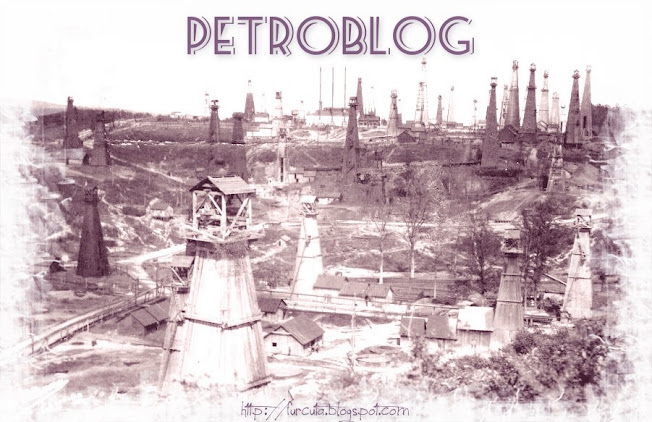
  Much of this material was presented on May 21st at the 2024 Oil History Symposium in Calgary, Alberta, Canada. The petroleum history of Romania is vast and fascinating. Much of it, especially the visual aspects of this industry, are documented in co-author Furcuta’s blog, Petroblog (https://furcuta.blogspot.com/). Thanks to James McDonald, Matthew Silverman, and Mary Barrett for reviewing this paper.

REFERENCES 

GUIDE DU CONGRES ET DES EXCURSIONS, 1925: 1st Congres International de Forages, Bucharest, September, 61 pp

L’ILLUSTRATION, 1926: July 3, p. 24. 

PETROLEUM, 1919: v. 7, p. 184-185. 

PETROLEUM ZEITSCHRIFT, 1925: September 20, v. 21, no. 27, p. 1720. 

SPENCER, Jeff and FURCUTA, Marius, 2018, Myron Kinley and the “Torch of Moreni,” in: CRAIG, J., GERALI, F., MacAULAY, F., and SORKHABI, R., eds., History of the European Oil and Gas Industry: London, The Geological Society, Special Publications 465, p. 375-80. 

STANCIU, Laura, 2000, Free-standing companies in the oil sector in Romania and Poland before 1948: typologies and competencies: Business History, v. 42, no. 4, p. 27-66. 

STOENESCU, Camil-George, 2018, Romania during the Interwar Period: an economic approach: The Romanian Economic Journal, Special 20th Anniversary Issue, Year XXI, no. 70, p. 80-93. 

TOLEDO (Ohio) BLADE, 1924: May 27, p. 4. 

VITORUL, 1913: no. 5, p. 3. 

Websites & Blogs 

https://campinatv.ro/News/Article/aa8fcce5-47cb-484d-a5fa-4d9e70851d2c_campina-romania-100-foto-olteanu-din- perioada-interbelica-un-atelier-de-tapiterie-din-anii-70-santierul-de-la-soldat-de-azi/, accessed June 13, 2024 

https://furcuta.blogspot.com/2015/10/160-ra-photographers. html?m=0

https://furcuta.blogspot.com/2021/03/well-1-ra-pleasa-on-fire.html 

https://furcuta.blogspot.com/2021/04/au-chat-noir-tunnel. html

https://furcuta.blogspot.com/2024/06/the-fire-of-oil-well-no-13-sr-campina.html

https://furcuta.blogspot.com/search/label/concordia

https://furcuta.blogspot.com/search/label/draganeasa

https://furcuta.blogspot.com/search/label/pascov https://furcuta.blogspot.com/search/label/rudolf

https://furcuta.blogspot.com/search/label/wehrli%20leo http://library.ethz.ch/en/

https://oglindadeazi.ro/stiri/campina-o-istorie-in-date-3/, accessed June 13, 2024

https://oglindadeazi.ro/stiri/file-de-cronica-nostalgiile-unui-vechi_23/, accessed June 13, 2024

http://revistanoua.3x.ro/revista_noua/puterea/Cuartetul-din-Campina.htm (November 30, 2002, interview), accessed June 13, 2024 https://www.loc.gov/pictures/collection/ffcarp/

https://www.okazii.ro/fotografie-veche-pe-carton-astra-romana-atelier-foto-olteanu-campina-1928-a201662118, accessed June 13, 2024 

ABOUT THE AUTHORS
Jeff Spencer is a charter member, past president, and current vice-president of the Petroleum History Institute (PHI). Jeff is a geoscientist and principal with Sentinel Energy, LLC, Houston, Texas. He received a BS in Geology from the University of Cincinnati and a MS in Earth Sciences from the University of New Orleans. He was previously employed as Chief Geologic Advisor with Amromco Energy, working Romania (2013-2017). He has authored or co-authored more than 50 oil field history papers. Jeff co-authored Ohio Oil and Gas (2008) and authored Texas Oil and Gas (2013) and Illinois Oil and Gas (2023). He collects postcards, philatelic material, and other ephemera with oilfield themes.

Marius Furcuta was born in Moreni, Romania and resides there today. He attended the Oil and Gas Ploiești University and since 1998 has worked as a petroleum engineer in Dâmbovița and Prahova counties, in Muntenia, a historical area of southern Romania where the country’s petroleum industry began. Marius is the author of Petroblog (https://furcuta.blogspot.com/), a comprehensiv.e. collection of photographs, ephemera, and text documenting Romania’s petroleum history.

Incendiul sondei nr. 31 Viitorul Mislea din 1930

Lupta, mai 1930 (Anul 9, nr. 2540-2563), 1930-05-18

Groaznicul incendiu petrolifer

Iata imprejurarile in care s’a produs acest dezastru.

Incă de alaltăeri s’au observat oarecare fenomene la sonda cu No. 31* a soc. „Steaua Română” situată pe perimetrul statului dela Runcu. Fenomenele indicau că atingerea stratului petrolifer nu este departe şi in consecinţă s’au luat măsurile dictate de asemenea împrejurări, construindu-se bataluri enorme de pământ aşezându-se pompe pentru tragerea ţiţeiului în conducte, etc.

Aceste măsuri erau insă luate ca pentru o erupţie de ţiţei, astfel cum sunt caracterizate în această regiune.

Intradevâr, s’a mai lucrat puţin la sonda 31 şi o mişcare deosebită ce s’a produs a indicat atingerea stratului de ţiţei in meotic. După o aruncare violentă de pământ, pietre, etc. a urmat imediat o erupţie din cel mai violente de ţiţei.

PRODUCEREA EXPLOZIEI ŞI A INCENDIULUI

Erupţia de ţiţei a început apoi să se accentueze din ce în ce şi în câteva ceasuri a ajuns formidabilă, După calculile făcute, este de 120-150 vagoane pe zi, deci cea mai mare producţie dela noi din ţară.

Erupţia a continuat în plină linişte până eri la orele 4 p. m. când s’a produs nenorocirea. In acest timp toate batalurile şi rezervoarele s’au umplut complect şi pomparea în conducte se făcea în mod normal.

Eri pe la ora 4, deodată se auzi un zgomot asurzitor ce creştea din ce în ce urmata apoi de o detunătură groaznică.

In acel moment o limbă uriaşă de foc se văzu deasupra sondei 31, cuprinsa complect de flăcări.

Lumea îngrozită — dându-şi seama de pericol; a luat-o la fugă care pe unde apuca.

Sirenele societăţilor petrolifere au început să răsune prelung anunţând focul care în acest timp lua proportii.

CĂLDURĂ INSUPORTABILA

O căldură înăbuşitoare se simţea pe o întindere de peste un km. Nimeni nu se mai putea apropia de locul dezastrului, iar la sondele din împrejurimi, dată fiind grava situaţie, s’a încetat Iucrul, lucrătorii fugind înspăimântaţi.

Pericolul era mai mare pentru sondele 30** ale soc. „Steaua Română” şi 71*** a soc. „Româno - Americană, în plină erupţie, cu o producţie de 30-40 vagoane pe zi. Au fost închise cu mare greutate ventilate lor de siguranţă şi ţiţeiul îndrumat pe conducte.

Căldura grozavă însă le pune mereu în pericol, astfel că este nevoe să fie continuu stropite cu apă


Dimineata, Anul XXVI.—No. 8406, Marţi 20 Mai 1930

Un nou dezastru

Pe o distanţă de 300 metri gârla de ţiţei a luat foc . - Cazarma soc. Româno-Americane şi 8 gospodării au fost mistuite de incendiU

Cum se prezintă situaţia acum

Dela trimisul nostru special

SCORŢENI-RUNCU, 17. - In tot cursul dimineţii de astăzi situaţia Ia sonda eruptivă în flăcări No. 31 a soc. „Steaua Română“ din schela Runcu a continuat să fie foarte critică.

In zorii zilei din cauza dogoarei flăcărilor dela sondă şi batalurile cu ţiţei din împrejurimi, o pădurice de pe creasta Runcului, s’a aprins. Sute de locuitori s’au îndreptat într’acolo şi cu ajutorul topoarelor a fost tăiată păduricea şi astfel s’a oprit lăţirea incendiului.

Intre timp din Ploeşti, dela societăţile petrolifere, au început să vie noui ajutoare. S’au adus aparate speciale pentru stropirea cu o materie spumoasă — întrebuinţată la incendiile în petrol — care a început să fie aruncată asupra batalurilor incendiate. Zeci de furtuni, mânuite cu dibăcie de specialişti, asvârleau spuma peste ţiţeiul incendiat din bataluri.

Si după câteva ore de muncă, batalurile au putut fi stinse una câte una, astfel că pe la amiază cele 5 bataluri cu ţiţei erau acoperite cu materia albă spumoasă.

Satul ia foc

Pe de altă parte locuitorii continuau sub conducerea autorităţilor, să lucreze la apărarea comunei de invazia ţiţeiului care curgea neîncetat pe apa Scorţei, chiar în mijlocul comunei.

La fiecare 50—60 de metri se ridicau baricade de pământ care să oprească pe apă scurgerea ţiţeiului. Pe la orele 2 şi jumătate , când lucrul era în toiu, s’a produs un nou mare dezastru, care a băgat jalea în populaţia comunei.

Cu toate măsurile luate ca nimeni să nu facă foc sau să aprindă vre-un chibrit, consemnul a fost călcat de cineva ...

Căci la un moment dat, gârla de ţiţei, între două diguri ridicate de locuitori, a luat foc chiar în imediata apropiere de întrarea în comună.

Flăcările mânate de vânt au cuprins cazarma lucrătorilor de la societatea Româno - Americană, care se afla chiar pe marginea gârlei.

Clădirea, cu două etaje, a cazărmei, a fost învăluită imediat de fo c aşa că orice ajutor pentru a o salva a fost de prisos.

STRĂDANIILE POMPIERILOR

Toată atenţiunea pompierilor din Ploeşti sub comanda căpitanului D. Băleanu şi a jandarmilor conduşi de căpitănii Eraclie Alexandrescu şi Const. Simniţeanu, s’a concentrat asupra izolării gospodăriilor din vecinătatea cazărmei incendiate. Dar toată munca autorităţilor fost de prisos, căci focul a cuprins încă o porţiune indiguită din gârlă unde s’a întins la clădirile din sat.

Şi astfel rând pe rând au ars gospodăriile locuitorilor Marin Grigore Furtună, Nicolae Postmangiu, Anica Grigore Dobre, văduvă, Sterian Dimitrie Mihalache, Constantin Tase Stan, Petre Dinu Ciocârlan şi încă imobile ale unor săteni.

Tuturor acestora flăcările le-au mistuit locuinţele cu mobilier, grajduri, magazii, fâneţuri, etc.

INCENDIUL DIN SAT A FOST STINS

Cu mare greutate, după 5 ore, de muncă titanică neîntreruptă, pompierii, jandarmii cu ajutorul locuitorilor au putut localiza incendiul numai la aceste 8 imobile şi opri ca întreaga comună să nu cadă pradă dezastrului.

Coloana de foc de pe gârlă era de aproape 300 metri.

Trebue să remarcăm că numai datorită măsurilor de prevedere luate de d. dr. Ştefan Popescu-Filuţă, prefectul judeţului care a dispus trimiterea auto-cistemelor pompieriei şi a ajutorului nepreţuit al acestora a putut fi salvată comuna întreagă dela incendiu.

Pagubele cauzate de incendiu la cazarma soc. Româno-Americane şi la cele 8 gospodării se ridică la peste 4—5 milioane lei.

ULTIMA SITUAŢIE

Pe la orele 8 jumătate seara, situaţia la sonda No. 31 se prezenta astfel:

Sonda continuă să erupă ţiţei în cantitate mare.

Limba de foc are o înălţime de 70—80 metri.

Cum debitul de ţiţei erupt este mare şi nu poate fi în întregime mistuit de flăcări, ţiţeiul se scurge pe sub bataluri în gârlă.

Ţiţeiul scăpat neincendiat şi cel din batalurile acoperite de spumă, nu poate fi pompat pe conducte deoarece în momentul incendierei, pompa cu toate instalaţiile şi maşinile de pompe prcum şi rezervoarele au fost distruse de foc.

Sgomotul produs de erupţia păcurei incendiate este mare iar coloane de foc luminează regiunea ca ziua.

De cum se trece de Chitila, focul poate fi văzut în toată splendoarea lui de călătorii din tren. După amiază a sosit în localitate d. Ştefan Popescu-Filuţă prefectul judeţului, însoţit de d. Petre N. Stoicescu, consilier judeţean şi a încurajat familiile rămase pe drumuri în urma dezastrului din comună.

Se vor împărţi ajutoare sinistraţilor.

I. VERMONT


Dimineata, Anul XXVI.—No. 8409, Joi 22 Mai 1930

SONDA DELA RUNCU S’A STINS

Cauzele incendierii n’au putut fi aflate

PLOEŞTI, 19. — Situaţia la sonda No. 31 a soc. „Steaua Română“ din schela Scorteni-Runcu continua sa fie neschimbata.

Am relatat cum în cursul zilei de Sâmbătă în urma muncei depuse de locuitori, locuitorii com, Scorteni şi cu ajutorul aparatelor de stins incendiile în petrol — batalurile au putut fi stinse.

De asemeni pericolul pentru comuna Scorteni pare a fi înlăturat.

Totuşi, ca o măsură de prevedere, autorităţile menţin hotărîrile luate de a nu se face foc în jurul gârlei Scortei, care trece prin comună şi pe care pluteşte încă păcura ce se scurge de pe sub batauri.

Sonda No. 31, ca şi în prima zi, continuă să erupă ţiţeiu cu o presiune foarte mare.

COLOANA DE FOC

Din această cauză coloana de foc care se înaltă în văzduh are o inaltime de 70 — 80 metri.

După unele calcule făcute de tehnicieni presiunea cu care erupe tiţeiul ar fi de 80 de atmosfere iar debitul de tiţeiu care se consumă în 24 de ore ar fi de peste 100 vagoane.

Sgomotul produs de erupţie este asurzitor şi se aude dela mare depărtare iar căldura enormă ce radiază dela foc face imposibilă apropierea până la o distantă de 30— 40 metri de gura sondei.

ANCHETA AUTORITĂŢILOR

Asupra cauzelor cari au provocat incendierea sondei No. 31, în timpul erupţiei, ancheta întreprinsă de organele regiunei miniere Mislea n’a stabilit încă nimic precis.

D-nii ing. Florin Dumitrescu, inspectorul regiunei şi ing. Cezar Ripeanu, şeful regiunei Mislea care din primele momente ale incendiului au fost la fata locului au ascultat o multime de tehnicieni şi lucrători cari au supraveghiat erupţia ţiţeiului până în momentul când sonda a fosi incendiată.

Din declaraţiile acestora, după cum am spus mai sus, nu s’a putut însă stabili dacă incendiul a luat naştere în urma unui scurt circuit electric produs la firele electrice din jurul sondei, sau dela scântei produse de lovirea unor pietre de scheletul de fier al sondei.

ÎNCERCĂRI DE STINGERE

Acum, atât cei dela regiunea minieră cât şi tehnicienii societăţilor petrolifere au început să studieze mijloacele de stingere a sondei.

Urmează să se vadă dacă sonda va putea fi stinsă pe Ia suprafaţă sau se va întrebuinţa mijlocul tunelului.

Mâine dimineaţă va avea loc la inspectoratul minier din Mislea o consfătuire a tehnicienilor societăţilor petrolifere din Runcu cu conducătorii inspectoratului spre a se hotărî asupra mijloacelor de stingere a sondei No. 31.

Pagubele cauzate până acum de erupţia incendiată, sunt enorme.

Am arătat că, luând foc gârla de petrol care trece prin mijlocul comunei Scorţeni, 8 gospodării săteşti au fost distruse de incendiu.

Soc. Steaua Română, proprietara sondei No. 31, a hotărât ajutorarea sinistraţilor pentru a-şi putea reface gospodăriile mistuite de flăcări.

I. VERMONT

Un comunicat al ministerului de Industrie şi comerţ

Privitor la aprinderea sondei No. 31 din schela Runcu aparţinând soc. Steaua Română”, ministerul de industrie şi comerţ ne comunică următoarele :

In ziua de 15 Mai la sonda No. 31 soc. „Steaua Română”, care era în erupţie închisă, din cauza marei presiuni a gazelor, a explodat coloana de burlane omorând un lucrător si rănind trei ingineri.

Erupţia liberă de cca. 100 vag. ţiţei pe zi şi nisip în mare cantitate ce a urmat, au rupt pentru moment barajele de reţinere ale ţiţeiului inundând gârla care trece prin satul Scorţeni. Concentrându-se numeroase echipe de lucrători, foarte curând barajele au fost restabilite, astfel că ţiţeiul a fost iarăşi oprit de a mai curge prin sat.

O SCÂNTEIE NENOROCITĂ

A doua zi, 1 Mai , din cauza unei pietre aruncate de sonda si care a cazut peste un stâlp de fer din vecinătate, s’a produs o scântee, care a incendiat un copac stropit cu ţiţei în timpul erupţiei şi care era în imediata apropiere a acestui stâlp.

De aci focul s’a propagat la sondă, care a exploadat, continuând să ardă cu extremă violenţă. Imediat focul s’a comunicat şi la batalele cu ţiţei formate de baraje.

Deşi numai la 1 1/2 kilometri, satul Scorţeni a fost pentru moment salvat, focul oprindu-se la acele baraje.

OPERA UNUI INCENDIATOR

Cu toate măsurile luate, însă, în sat, de autorităţile miniere şi de jandarmerie de a se stinge focul prevenind aprinderea ţiţeiului care se fixase pe malurile gârlei, totuşi, in dimineaţa zilei de 17 Mai la orele 3, o mână criminală sau un inconstient a dat foc gârlei in dreptul satului. Focul s’a întins cu repeziciune pe gârlă in jos in mijlocul satului. Urmările acestui incendiu au fost distrugerea unei cazarme pentru lucrătorii soc. Româno-Americană si a trei gospodării din ale locuitorilor, iar altor trei locuitori le-au fost distruse unele dependinţe şi gardurile precum şi pomii din lungul gârlei.

După câteva ore focul a fost stins de pompierii veniţi din Ploeşti şi locuitorii satului.

In sat n’a fost nici o victimă omenească.

In schelă, actualmente, ard gazele şi ţiţeiul ce erup din sondă, formând o coloană de foc de cca. 40-50 metri înălţime.

S’au luat măsurile necesare pentru stingerea focului şi captarea ţiţeiului, urmând ca după aceasta să se procedeze la oprirea sondei pentru a reface instalatiunile distruse de incendiu.


Opinia, mai 1930 (Anul 26, nr. 6893-6915), 18.05.1930

FOCUL DE LA RUNCU ia proporţii catastrofale

Ploeşti 17.— Focul dela Runcu se întinde îngrozitor.

S’au aprins trei noui rezervoare. Toată regiunea este o mare de foc, coloanele de flăcări atingând înălţimea de 60 metri.

1000 de lucrători au fost aduşi pentru oprirea dezastrului.

Populaţia din Scoţeni a început să evacueze casele.

Au fost părăsite sala cinematografului şi casa preotului din Scorţeni.

Locuitorii au construit un zid pentru scurgerea ţiţeiului. Primarul a cerut noui ajutoare.

Până acum pagubele se urcă la zece milioane lei. Dar pericolul se întinde, focul ia proporţii catastrofale. Nu se ştie exact numărul victimelor


Opinia, mai 1930 (Anul 26, nr. 6893-6915), 21.05.1930

Curioase fenomene naturale au stins sonda dela Runcu - Scorţeni

Ploeşti 20— Sonda No. 31 dela Scorţeni-Runcu, s’a stins ieri dupa amiază, în împrejurari curioase.

La un moment dat, terenul s’a zguduit pe o rază de câţiva km ; apoi s’a prăbuşit chiar lângă sondă. Pământul a căzut în gura sondei şi flacăra s’a stins brusc.

Orce pericol pare evitat.

Numeroşi tehnicieni lucrează la normalizarea locului.

Locatia incendiului : 45.1089421,25.84017791

Sonda nr. 31 Viitorul Mislea a fost sapata in anul 1930 la o adancime de 933 metri.

Sonda nr. 30 Gallia Bustenari a fost sapata in anul 1930 la o adancime de 910 metri.

Sonda nr. 71 11 Iunie Bustenari a fost sapata in anul 1930 la o adancime de 848 metri.
Incendiul sondei nr. 18 Bis UN RCOL Runcu Bustenari din 1927

Adevărul, 40, nr. 13288, 13 aprilie 1927

Trei sonde incendiate la Gropi

CAMPINA, 11. – Un incendiu a izbucnit la sonda No. 18 a societatii ‘’Unirea’’ dela schela Gropi-Bustenari. Sonda era in eruptie.

De aci focul s’a intins la sonda No. 7 a aceleasi societati si apoi la sonda No. 267 a soc. ‘’Steaua Romana’’.

Sute de muncitori au fost concentrati la locul sinistrului.

Inginerul sef Moroy si lucratorul Ion Vasile Toma au capatat grave arsuri in timpul lucrarilor de salvare si au fost internati la spitalul din Ploesti.. Mai usor raniti sunt maestrul sondor Constantin Palada si Nicolae Fodac..

Cum focul continua cu furie si ameninta si alte sonde precum si intregul sat Sondesti, s’au luat masuri de catre administratia ambelor societati pentru localizare lui. Tarziu la orele 12 noaptea, focul a fost stins.

Pagubele sunt de cateva milioane.

S’a stabilit ca focul a luat nastere dela o scanteie produsa de o piatra care lovise geamblacul de sus.

Locatia incendiului : 45.11719759,25.80893212

Sonde distruse in incendiu :

Sonda nr. 18 Bis UN RCOL Runcu Bustenari apare terminata din foraj in 1929 fiind sapata pana la 723 metri.

Sonda nr. 7 Craiova Runcu Bustenari apare terminata din foraj in 1929 fiind sapata pana la 675 metri.

Sonda nr. 267 SR Bustenari apare terminata din foraj in 1929 fiind sapata pana la 546 metri.

Incendiul sondei nr. 209 11 Iunie Bustenari din 1926

Adevěrul, ianuarie 1926 (Anul 39, nr. 12900-12922), 1926-01-15  nr. 12909

Sonde incendiate

Luni seara a isbucnit un puternic incendiu la sonda No. 209 „ Româno-Americană“ din schela Runcu-Bustenari.

Sonda era in erupţie şi arunca intermitent cu ţiţeiul, bolovani. Unul din aceştia a izbit piesele de fier ale construcţiei provocând scântei cari au aprins ţiţeiul.

Focul a luat Imediat proporţii uriaşe. Au sosit dela Ploeşti directorii societăţii şi specialişti care au lucrat în vara trecută la stingerea sondei dela Pleaşa-Moreni.

S’a conceput îndată planul construirii unui tunel, la care se lucrează zi şi noapte. In tunel se vor instala conducte cu aburi, cari fac posibilă apropierea lucrătorilor de focul primejdios.

*

In timpul acesta a luat foc şi sonda No. 2. a societăţii Unirea situată ta o depărtare de 150 metri. Ori ce ajutor a fost de prisos, sonda a ars in întregime.

Nu s’a semnalat nici o victimă omenească.

Adevěrul, ianuarie 1926 (Anul 39, nr. 12900-12922), 1926-01-16  nr. 12910

Incendiul dela sonda Runcu-Bustenari

Se fac iarăşi tot felul de încercări pentru stingerea focului

Focul dela sonda nr. 209 din Runcu-Bustenari continuă sa ardă. Sonda se află în erupţie din ziua de 3 Ianuarie, şi dădea câte 10 vagoane pe oră, adică 240 vagoane pe zi.

Neputându-se capta prin batale imensa cantitate de ţiţei, li s’a dat drumul pe şanţul de scurgere, spre sonda No. 2 a societăţii ‘’Unirea’’.

In ziua de 6 Ianuarie, sonda a început să erupă şi pietre. Din cioc­nirea acestora au inceput sa sară scântei, care au incendiat ţiţeiul.

Focul s’a propagat imediat şi la sonda No. 2, care s’a aprins şi a ars in intregime, orice ajutoare fiind imposibile.

*

Pentru a curma dezastrul la sonda No. 209, s’a recurs la diferite mijloace. Mai întâi s’au aşezat în jurul sondei tuburi cu aburi, la adăpostul cărora lucrătorii se pot apropia de dogoarea focului, pentru a arunca saci cu nisip la gura sondei.

Acest procedeu a fost întrebuinţat si cu ocazia incendiului de Ia Pleaşa-Moreni.

O echipă de lucrători, condusă de ingineri americani, a aşezat la baza sondei, un aparat special, capabil să capteze 49—30 vagoane de ţiţei. Prin aceasta focul, fiind mai puţin alimentat, scade în intensitate, iar pagubele societăţii se micşorează şi ele.

In fine, o altă echipă lucrează la fabricarea unui clopot, prevăzut cu un ventil Ia baza lui. In interiorul clopotului se află un tub cilindric, larg de 12 ţoli şi lung de cinci metri, care va absorbi gazele emanate. Acestea vor continua să ardă deasupra clopotului. Atunci se va inchide ventilul de la bază, astfel ca gazele să nu mai poata pătrundă în burlan şi să nu mai alimenteze focul.

Dacă nici acest procedeu nu va reuşi, se va recurge la sistemul tunelului, practicat şi la sonda din Pleaşa, Pentru această eventualitate, paralel cu celelalte lucrări, se continuă cu săparea tunelului, Până acuma au fost săpaţi trei metri.

Societatea „Româno-Americană“ înregistrează pagube considerabile.

Adevěrul, ianuarie 1926 (Anul 39, nr. 12900-12922), 1926-01-19  nr. 12912

Focul a fost stins la sonda din Runcu

Sambată Ia 11 dimineaţa s’a putut stinge focul izbucnit Ia sonda dela Runcu, prin astuparea gurii coloanei cu un clopot anume fabricat.

După acoperirea sondei s’a procedat la stingerea flăcărilor din jurul clopotului.

Focul a lost complect stins.

Sonda continuă să erupă 69 vagoane ţiţei pe zi.

Locatie : 45.11341241,25.84321309
Sonda 209 11 Iunie Bustenari a fost sapata in anul 1924 la o adancime de 687 metri